Rising Digital Frauds in Ghana and How to Deal With Them in 2026
Digital Frauds are a Global concern that needs to be addressed with time and strict punishments.
Ghana is one of the beautiful countries of West Africa. Here, the residents are educated and rooted in their traditions. And with time, they are evolving themselves with Digital accessibility. This transformation has opened up many chances to work, live and do business in Ghana. Currently, you can easily do mobile money bill payments, online shopping, and digital money transfers to purchase things in Accra Mall and so on. These advances have improved the speed, accessibility and convenience of financial services for millions of Ghanaians.
Sadly, the advanced technologies that make life easier also give opportunities to fraudsters. Criminals are constantly using new schemes to trick people into sharing their personal information and to gain access to bank accounts and mobile wallets.
Digital fraud is one of the fastest-growing threats to Ghana’s digital economy, from fake investment schemes to phishing messages and impersonation scams. The challenge is no longer just for financial institutions. Now students, workers, entrepreneurs and even retirees are potential victims. With the growth of digital services, awareness and responsible online behaviour have become as important as strong security systems.
Why Are Digital Frauds Rising?
Several reasons have been given for the rise in digital fraud in Ghana.
Currently, with rapid expansion, mobile money payments have become accessible in remottest area where some of the people are unaware of these digital frauds. This financial inclusion is a major achievement, but criminals have also turned their attention to exploiting unsuspecting users.
At the same time, cybercriminals are getting smarter. Instead of traditional technical hacking, they are doing social engineering by creating fear, urgency, and even fake voices using Artificial Intelligence(AI). They exploit this to convince victims to disclose confidential information willingly.
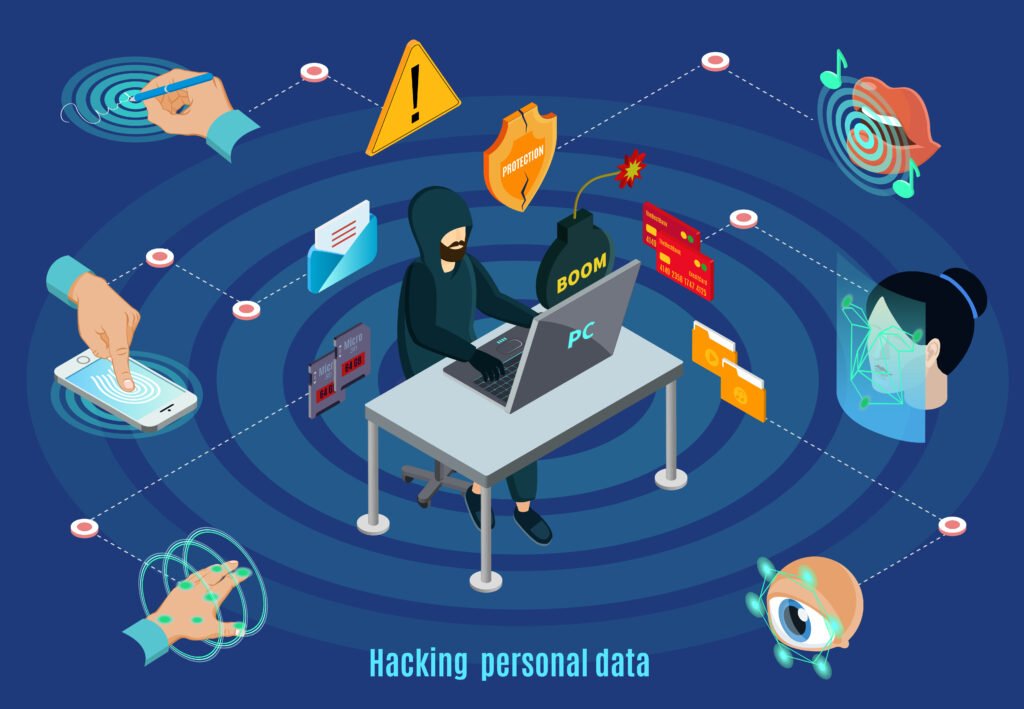
Another factor is the lack of awareness of cybersecurity. A large number of users share one-time passwords (OTPs), PINs or account details, not knowing that legitimate financial institutions never ask for such information over phone calls, text messages or social media.
The increased use of social media marketplaces has also opened up avenues for fake sellers, fraudulent online shops and payment scams.
What The Reliable Financial Resources Say on Digital Fraud?
The latest report from the Bank of Ghana reveals that the country’s financial sector is still fighting digital frauds despite the investments being made in security systems. The central bank has repeatedly said existing penalties may not be strong enough to reduce digital fraud, particularly as criminals continue to exploit new technologies and communication channels.
The Bank has also called for more cooperation between banks, fintech firms and mobile money operators to improve detection and prevention of fraudulent activities.
Cyber and technology-related fraud has been a recurring theme in industry discussions, leading to millions of Ghana cedis in financial losses and thousands of cases of fraud reported annually in regulated financial institutions. These figures demonstrate that digital fraud is not a problem for one or two states, but a national problem requiring a coordinated response.
Common digital frauds that happen to Ghanaians
This list is based on various digital fraud cases that have happened in previous years. It’s important to understand each fraud to make secure transactions in future.
1. Mobile Money Fraud
Fraudsters often call their victims claiming to be customer service agents. They may claim there is a problem with an account, or offer a reward, and then ask for verification codes or PINs. As soon as the victim gives the information, the money is quickly withdrawn from the account.
2. Phishing
Victims receive fraudulent emails, SMS messages or WhatsApp messages purporting to be from trusted banks or organisations.
The messages usually include links to bogus websites that trick victims into entering their banking credentials.
3. Fake Investment Websites
Scammers will advertise get-rich-quick schemes with guaranteed daily or weekly profits. After collecting money from hundreds of investors, many of these schemes vanish. For example, playing games to get cash in bank accounts. Once the user enters their Bank Account details to withdraw money, they lure him/her for accepting privacy policies and consent to the use of information.
4. Scam of Social Media Marketplace
The number of people shopping online is increasing more and more, but there are lots of fake sellers who sell products that never arrive after you pay. Some fraudsters even mimic legitimate businesses with copied logos and stolen photographs.
5. Fraud personality
Personal data leaked or socially engineered could be used by criminals to open accounts, carry out illegal transactions or impersonate someone online.
These ways show that fraud is often successful because it exploits trust, not technology. Digital fraud isn’t just about individual victims. Customers lose confidence in the businesses also. If trust is gone, innovation and economic growth are gone, too. That’s why fraud prevention has become a major national priority.
Govt. Take on Controlling Digital Frauds
The Bank of Ghana(BoG) and Financial institutions are investing in fraud monitoring systems, more stringent customer verification processes and stronger cybersecurity technologies. The Cyber Security Authority (CSA) is also still running public education campaigns to help citizens identify online threats and report cyber incidents on time.
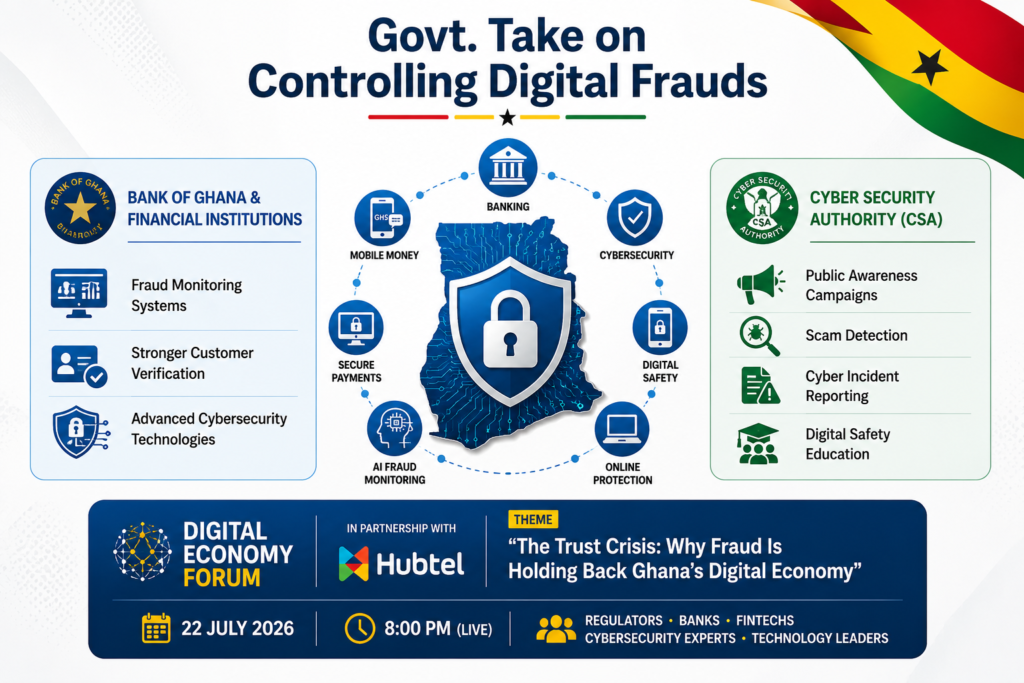
An important industry discussion is happening by the Digital Economy Forum in partnership with Hubtel on the topic “The Trust Crisis: Why Fraud Is Holding Back Ghana’s Digital Economy.” You can watch it live on 22nd July 2026 at 8 pm. The forum includes regulators, financial institutions, cybersecurity and technology leaders to deliberate on practical strategies to reduce fraud, boost consumer confidence and foster safer digital financial services.
How Ghanaians Can Protect Themselves?
Everyone has a part to play in preventing digital fraud. With the following measures, one can easily identify fraudsters and can save their money. These are:
- Do not reveal confidential information. Banks and mobile money providers will never request your PIN, password or OTP.
- Look for unusual calls. If someone calls and says they are from your bank, hang up and call the bank back at the official customer service number.
- Never set your passwords based on DOB, family members and other public information. Also, make a reminder to change them frequently and keep a private folder or physical diary if you are afraid of forgetting the PINs.
- Set up two-factor authentication. This adds a further layer of security to online accounts.
- Don’t click on suspicious links. Never click on links in unsolicited email or text messages unless you have confirmed they are legitimate.
- Keep your devices up to date. Free up them from unwanted mails and messages. Also, frequently check if there is any software update or not.
Along with this, teach family members. Older family members and younger internet users are often targeted as they may be less familiar with modern scams. You can make a children’s profile and connect with your ID to keep an eye on what they are searching.
Small Businesses Are Under Increasing Threat
Small businesses often don’t have the availability of a lot of technical resources, but large corporations usually do. Unfortunately, smaller companies are often targeted by cyber criminals who might have weaker security systems.
Here are some simple but effective practices business owners should consider:
- Back up your important business data consistently.
- Utilize licensed software.
- Limit access of employees to confidential information.
- Update your operating systems and antivirus software.
- Verify supplier payment claims before making payments.
Even small investments in security can save you big money.Also, businesses and staff need to have a clear understanding of cybersecurity and encourage quick reporting of suspicious activities. SIM and Mobile sellers should make sure that the customers’ data is encrypted and up to date. Timely checks on employees’ activities and ensure there is no mole in the organization.
Why We Need Tougher Laws and Faster Enforcement?
Cybercriminals often operate in different cities or countries, making investigations more difficult. With the increasing sophistication of digital fraud, law enforcement agencies require sophisticated digital forensic tools, specialized training, and enhanced collaboration with international cybersecurity organizations.
The Bank of Ghana(BoG) has also pointed to the need to review existing penalties to establish whether they provide sufficient punishment against digital fraud. Strong enforcement sends a clear message that cybercrime is not a low-risk crime, but a serious crime with serious consequences.
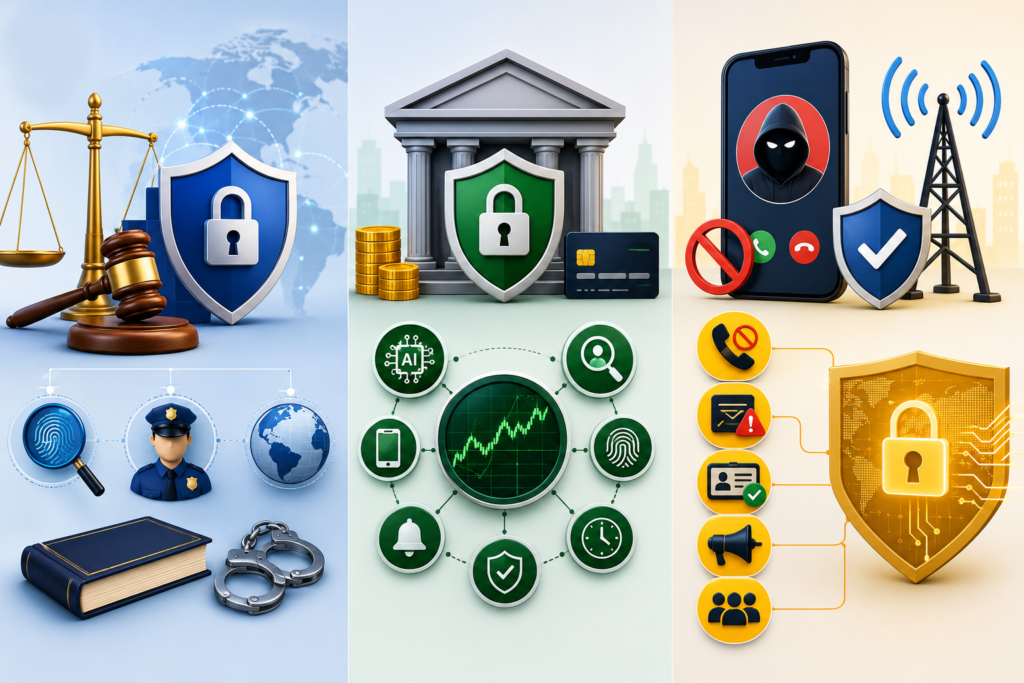
Also, timely prosecution of offenders can also enhance public confidence in Ghana’s digital financial ecosystem. Financial institutions need to keep investing in security. Banks, savings and loan companies, fintech companies, and mobile money providers have already adopted some security measures, but cybercriminals are constantly innovating their methods.
Financial institutions can improve protection by:
- Using AI to detect unusual transaction patterns.
- Adding behavioral analysis to detect suspicious account activity.
- Biometric authentication, wherever required.
- Real-time transactions to notify customers.
- Suspicious transactions are delayed until they can be confirmed.
Moreover, regular cybersecurity testing and independent security audits can help you to find vulnerabilities before criminals do.
How Can Telecom Companies Block Digital Frauds?
Many scams start with phone calls and text messages, so telecommunications providers have an important role to play in reducing or blocking digital fraud.
Measures to improve consumer protection could include:
- Block calls from known scam numbers
- Recognizing mass messaging scam campaigns.
- Business SMS Sender ID Verification.
- Public awareness campaigns to educate subscribers .
- Partnering with regulators to investigate fraud networks.
A reduction in criminals’ ability to contact potential victims can lead to a significant reduction in successful fraud attempts.
What to do if you are a victim?
Despite being cautious, anyone can fall victim to digital fraud. If you believe there is digital fraud:
- Contact your bank or mobile money provider immediately.
- If necessary, request the temporary freezing of the affected accounts.
- Change passwords on online banking, email and similar accounts.
- Keep screenshots, receipts of transactions and phone numbers as proof.
- Report the incident to the appropriate law enforcement or cybersecurity agency.
- Let family members and colleagues know if scammers may be using your stolen identity.
Also, rapid reporting allows authorities to identify fraud patterns that could affect other citizens. Don’t hesitate to post on Social Media to make everyone safe.
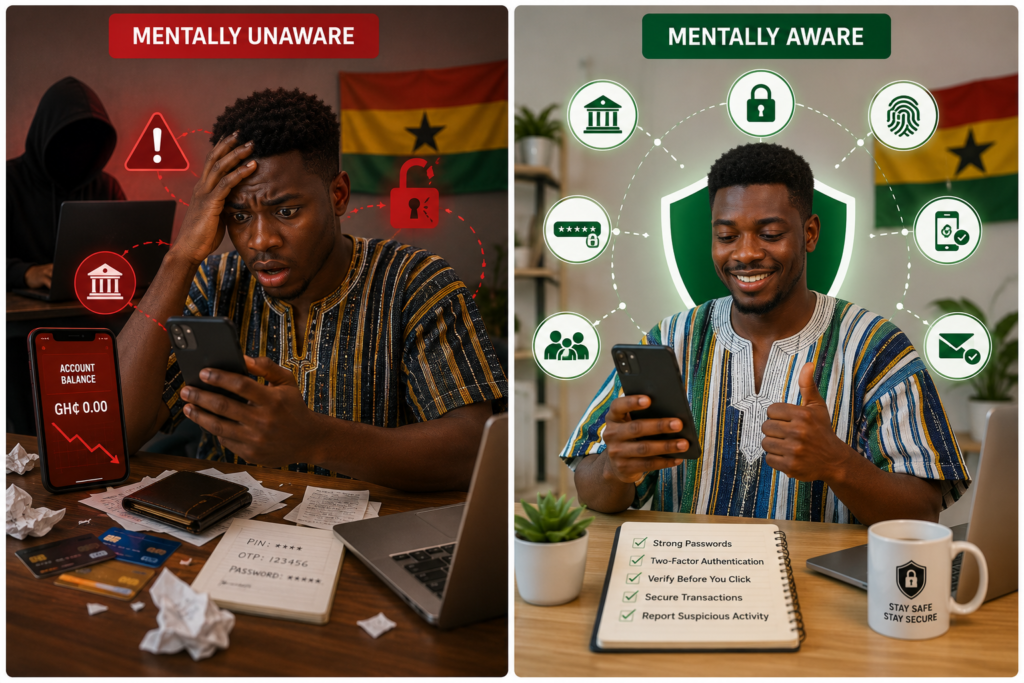
Ghana Is Ready To Secure Ghanaians from Digital Frauds
The good news is Ghana is making some positive progress already. In 2025, President John Mahama launched the National Cyber Security Awareness Month under the theme “Building a safe, informed and accountable digital space” and stressed that cybersecurity is a shared responsibility.
He also launched the Joint National Cyber Security Committee (JCC) to improve coordination among security agencies and announced Ghana’s commitment to strengthen international cooperation against cybercrime, including support for the United Nations Convention on Cybercrime.
These steps are intended to strengthen cyber resilience, boost the safety of digital banking systems, and make Ghanaians more confident to continue enjoying the benefits of digital innovation while minimizing the risks posed by cybercriminals.
“Digital Ghana is not the responsibility of one institution, but a collective commitment that is beneficial to all.”