Ghana’s Crude Oil Future: Creating New Opportunities from Global Energy Challenges
The price of crude oil has fluctuated amid geopolitical tensions, and many countries are reviewing their energy security. The oil markets are still volatile around the world, from shipping problems in the Middle East to global demand changes. These developments are a reminder to all oil-producing countries that long-term planning is as important as natural resources themselves. And this conversation is particularly important for Ghana.
Ghana’s crude oil production has fallen for the past six years, according to recent reports, pushing the country’s output far below earlier highs. The fall has reduced government revenue and has made it more urgent to revive the country’s petroleum sector.
The figures may be frightening, but this is not Ghana’s destiny. But it is an opportunity for the country to reset its energy strategy, improve production efficiency, and prepare for a more resilient future.
Why Oil is back in the spotlight: Ghana’s Outlook
Oil is one of the most valuable energy sources in the world. It fuels transportation, manufacturing, aviation, agriculture, and so much more. International conflicts that threaten major shipping routes, such as the Strait of Hormuz, usually provoke a rapid reaction in the world markets. Investors get nervous, supply chains tighten, and oil prices tend to rise on fears of supply disruption rather than on actual shortages.
This holds a very important lesson. Energy security is no longer simply about crude oil production, but about stable supply, efficient transport and long-term planning. Market volatility tends to impact the better-prepared countries more negatively.
Accounting for Ghana’s fall in production
The Institute for Energy Security (IES) has forecast a further decline of Ghana’s crude oil production over the next six years. Some mature oil fields are in natural decline, and delays in new investment and exploration have slowed replacement production. As a consequence, these factors have resulted in a decline in national output over time.
Ghana is not the only country in natural decline in its oil production. Many oil-producing countries face similar problems. Current fields are getting old. The difference is in the response of governments and industry, in investment, technology and future planning.
Step forward under John Mahama
The good news is that renewed interest is being shown in Ghana’s oil sector. President John Dramani Mahama has announced plans to invest US$3.5 billion to reverse the country’s multi-year decline in crude oil production. The move was aimed at attracting international investment and building confidence in Ghana’s energy sector.
If successful, these projects may:
- Boost Ghana’s crude oil production
- Generate more employments
- Foster investor confidence
- Create more revenue for government
- Improves Ghana’s long-term outlook
While big investments aren’t a solution for all problems, yet they send an important signal that Ghana is committed to strengthening one of its most valuable economic sectors.
Why World Events Still Matter
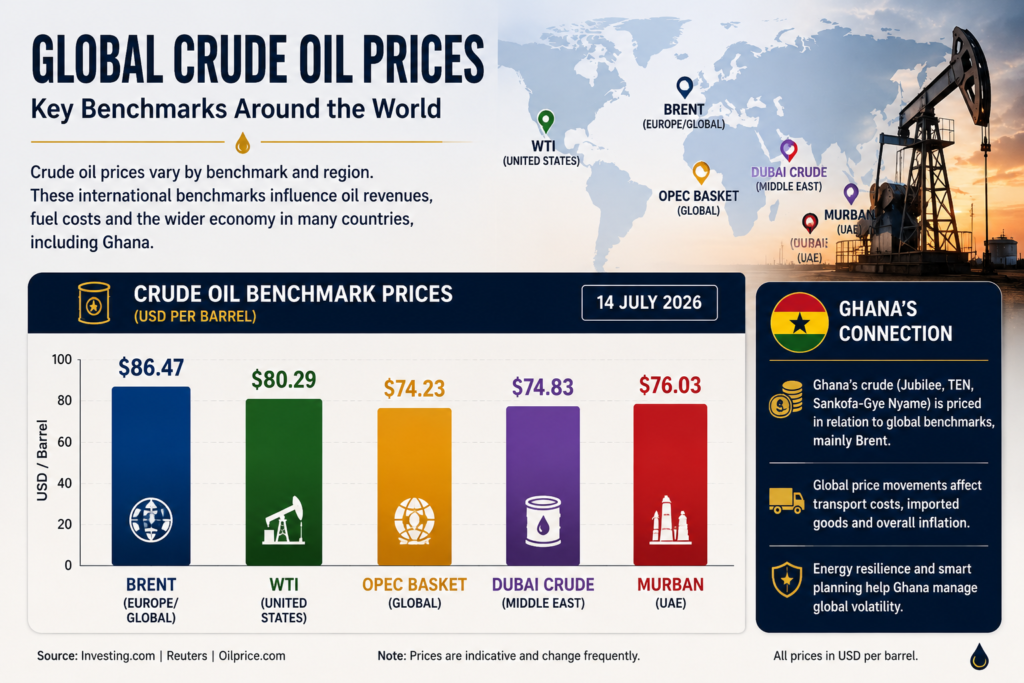
Ghana has its own crude oil, but prices are still influenced by the international market. Oil is a world market.
And if world prices go up because of conflict or supply chain disruptions, many countries, including Ghana, can still be indirectly affected through transport costs, imported goods and the overall economy. That is why governments around the world are increasingly looking at energy resilience, rather than simply reacting to crises as they arise.
Seeing Beyond Short-Term Price Changes
Oil prices always go in cycles. Such periods of high prices are usually followed by corrections as production increases or world demand fluctuates. Looking beyond today’s market movements, Ghana can derive more benefits from laying the foundations of the petroleum industry by:
- Improved field management
- Increased operational efficiency
- Speed up project development
- Robust Investor Relations
- Regulate transparently
These improvements help to provide stability in the long term with short term market fluctuation.
Confidence among investors is rising
International investors tend to like countries with good policies, predictable regulations and long-term economic plans. Ghana is considered one of the more stable democracies in West Africa. Moreover, transparent governance and an attractive investment environment can help to stimulate more exploration and production activity in the years ahead.
More investment not only benefits the petroleum sector but also helps create jobs, improve infrastructure and increase government revenue.
Global Energy Trends: What Ghana Can Learn
Governments are responding to global energy uncertainty by stockpiling their own capacities instead of turning to international markets. Recent world events have demonstrated that countries with a more diverse energy plan are better able to adjust to periods of geopolitical tension.
This means Ghana needs to continue:
- Promote responsible investment
- Increase output efficiency
- Support for technology innovation
- Build self-confidence with international partners
- Make standard energy policies
These improvements will help the country to easily tackle the external disturbances in future.
Why it matters to all Ghanaians
Oil production, often measured in national statistics, is important for everyday life. A stronger petroleum industry can support:
- Increasing Government Income
- More money for infrastructure.
- Creating jobs
- Confidence in the business community improved
- Continued economic growth
Crude oil alone cannot solve all the economic problems, but it remains a major contributor to national development. It’s the prudent management of oil that allows countries to have the confidence to invest more in public services and future economic opportunities.
Ghana needs to continue enhancing its crude oil production capabilities to build resilience against global energy fluctuations. By investing in infrastructure and technology, the country can create more employment opportunities and stimulate economic growth. A robust oil sector will not only fortify national development but also empower Ghanaians to thrive amid external challenges. Ultimately, a well-managed crude oil industry will enable sustained investments in public services and future endeavors.
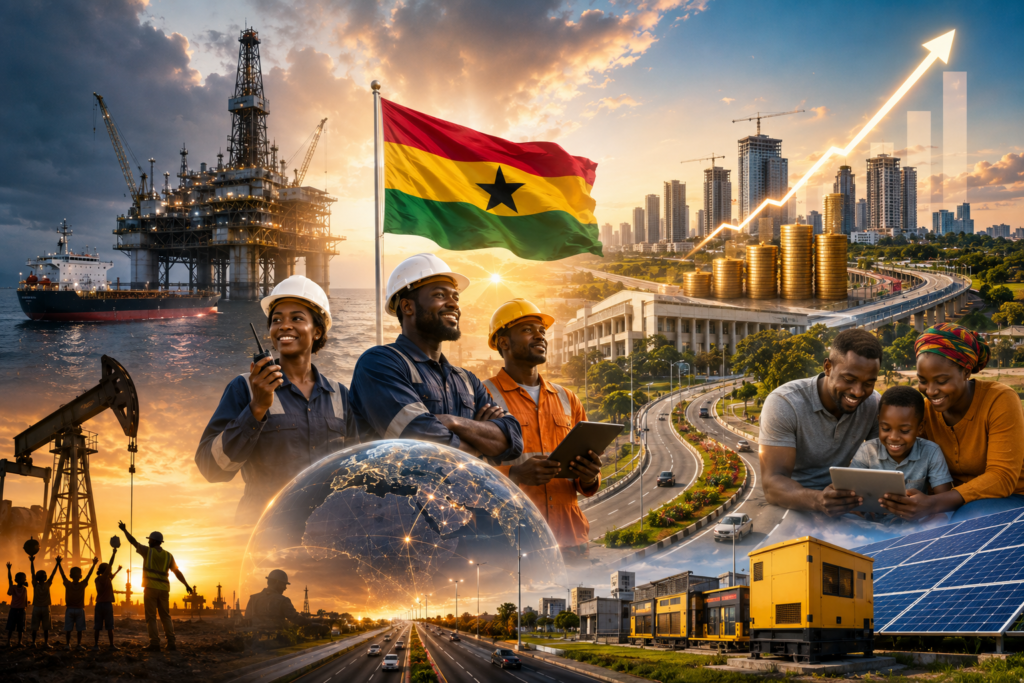
Remaining positive in a period of world chaos
Headlines around the world are dominated by conflict, rising prices and economic uncertainty.
But the history of energy markets suggests they do tend to smooth out over time as production adjusts, diplomacy progresses, and new investments come online. And today’s challenges in Ghana’s crude oil shortage are tomorrow’s opportunities.
The country has a well-trained workforce, an established petroleum industry and a renewed push to attract investment. This provides a solid basis for potential expansion. The latest promises from the government seem to suggest that the decline in production has become a national priority.
The period would provide the country with the opportunity to improve its energy sector for the next decade and not to view the decline in production as a permanent setback.
Conclusion
Geopolitical events will continue to influence uncertainty in the global crude oil markets, affecting supply and prices. But the challenges are also encouraging countries to plan better, attract investment and increase domestic production. Ghana has a clear path to follow. Modernizing production, creating a conducive environment for responsible investment, maintaining policy stability and building on the confidence in the petroleum sector.
With sustained commitment from government, industry stakeholders and international partners, Ghana has the potential to convert today’s challenges into tomorrow’s economic success. The world energy landscape may be changing, but with strategic planning and continued investment, Ghana can be positioned as a stronger and more resilient energy producer for years to come.