
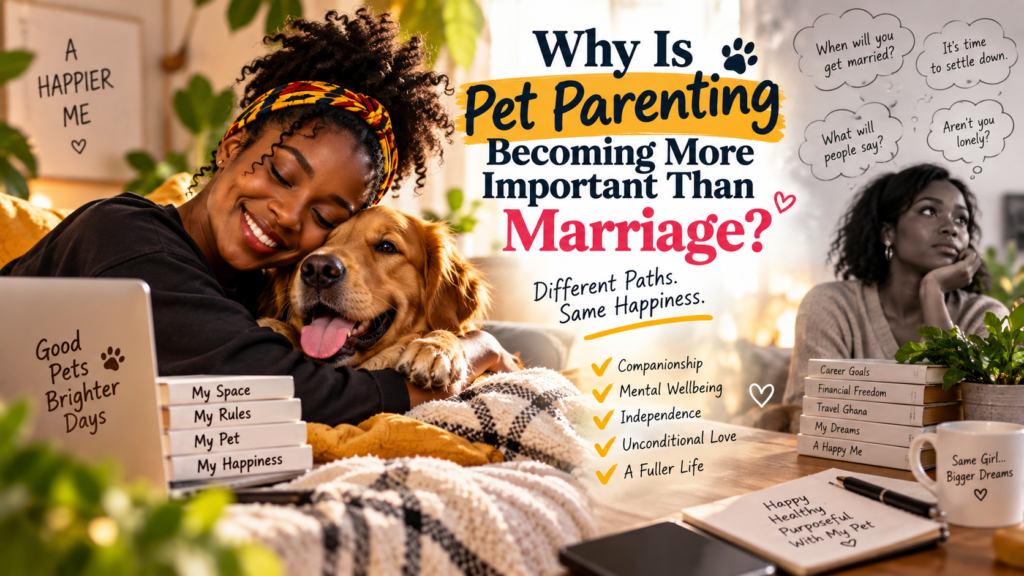
Why is pet parenting becoming more important than marriage?
“Pet Parenting is not a day task; it’s a lifetime promise.”
In Ghana, there is a familiar question that many young adults eventually hear from parents, relatives, or family friends:
“So, when are you getting married?”
It can come at a family gathering, during a phone call with a parent, or even in the middle of an otherwise ordinary conversation. Marriage has traditionally carried enormous importance in Ghanaian society. It is connected not only to love and companionship, but also to family, responsibility, adulthood, and social expectations.
But Ghana is changing.
For many young Ghanaians, life no longer follows the same timeline their parents experienced. Young people are spending longer in education, building careers, starting businesses, dealing with the cost of living and, in many cases, taking more time before committing to marriage. And during that period of single life, another relationship is quietly becoming important.
The relationship with a pet.
A dog waiting at the gate in Accra. A cat sleeping in a young professional’s apartment in Kumasi. A pet becoming part of the daily routine of someone who is living away from their family.
This raises a mesmerizing question:
Why is pet parenting becoming more important than marriage for some young Ghanaians?
The answer isn’t that young Ghanaians have suddenly stopped believing in marriage. It is that companionship itself may be changing.
Ghana Has Always Had a Practical Relationship With Animals
To understand today’s pet culture, we have to look at how animals have traditionally been viewed in Ghana.
Dogs, in particular, have long had a valuable purpose. In many Ghanaian homes, having a dog means having an extra layer of security. A barking dog can alert a household to strangers and movement around the property.
Earlier research in the Greater Accra Region found that security was the main reason for keeping dogs in the study population, while companionship represented a much smaller proportion. That tells us something important about Ghanaian attitudes toward dogs. Dogs have historically been expected to do something.
- Guard the house.
- Protect the compound.
- Watch the surroundings.
But increasingly, that may not be the whole story. The same dog that guards the house can become the animal that a young person talks to after work. It can be both protector and companion. That combination makes Ghana’s relationship with dogs different from the simple idea of “having a pet.”
A New Generation Is Giving Animals a More Emotional Role
Something appears to be changing among younger owners.
Recent research conducted in Dormaa Central Municipality in Ghana’s Bono Region provides a useful glimpse into this shift. The study found that people aged 15–25 formed the largest age group among respondents. Dogs and cats were overwhelmingly the most common companion animals, with 41.94% of respondents keeping dogs and 35.48% keeping cats. A further 20.97% kept both. But the most striking finding was how owners viewed these animals.
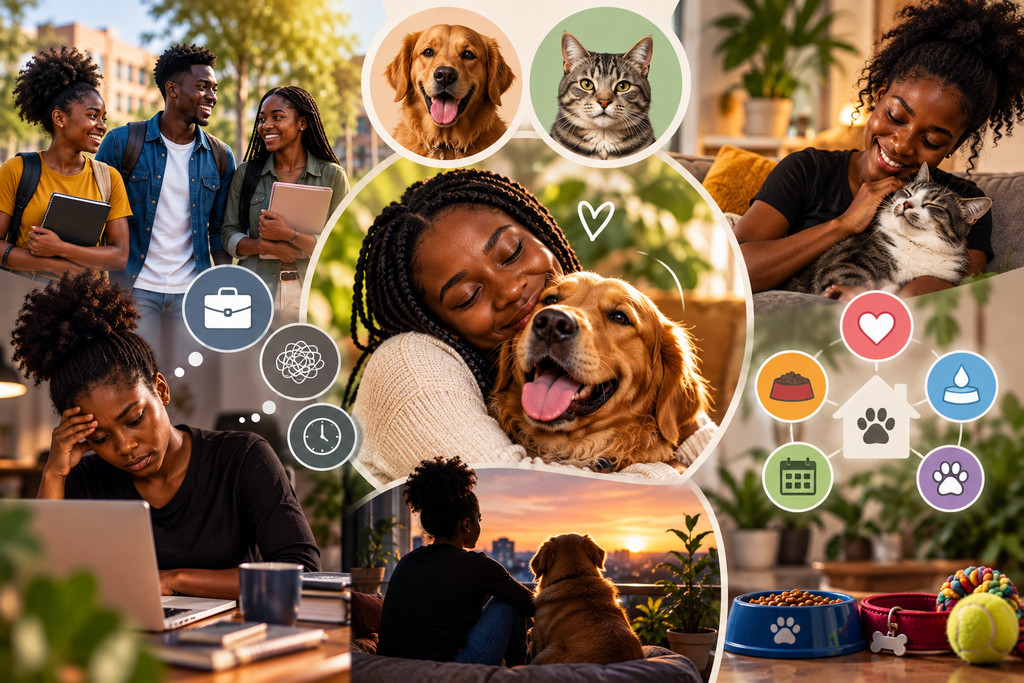
80% of respondents considered their pets part of the family.
That phrase — part of the family — is important in Ghana.
Family is a powerful concept in Ghanaian society. It extends well beyond the people living under one roof and often includes parents, siblings, grandparents, cousins, and a wider network of relatives. For an animal to be described in family terms therefore represents more than simply liking a dog or cat. It suggests:
- Emotional attachment.
- The animal has a place in the home.
- It has a name.
- It has routines.
More importantly, someone is responsible for them. This clearly shows that pets are helping young Ghanaians with work pressures and loneliness in this digital era.
Why Are Young Ghanaians Comfortable Staying Single Longer?
There is no single answer. Some young people want to finish school before marriage. Others want a stable income. Some want to own a home or build a business first. Others have simply decided that marriage should happen when they meet the right person rather than because relatives expect it.
Research into relationships among young adults in Ghana has also found evidence of changing attitudes toward relationship arrangements, including increasing consideration of cohabitation among some emerging adults. These changes do not mean that marriage has lost its value.
They show that the road toward marriage is becoming less predictable. And when marriage is delayed, people still have the human need for affection and companionship. That is where pets can enter the picture.
A Dog Can Become Your First Family When You Live Alone
Imagine a young Ghanaian who moves from their hometown to Accra for work. Suddenly, everything is different. The family home is far away. Friends have their own schedules. Work can consume most of the day. The apartment may be quiet when they return. Then there is the dog.
The dog does not replace the person’s parents or siblings. But it changes the feeling of coming home. There is something alive waiting there. There is a routine. There is someone to care for.
For young Ghanaians experiencing independent living, that can be meaningful. This is one reason the conversation about pets for young Ghanaians should go beyond simply asking which animals people prefer. The bigger question is what those animals represent.
Cats Are Finding Their Own Place in Ghanaian Homes
Dogs remain strongly associated with Ghanaian pet ownership, but cats are becoming an important part of the picture too. The recent research from Dormaa found cat ownership only slightly behind dog ownership. Cats can fit particularly well into urban lifestyles.
A young person living in a smaller home or spending long hours at work may find a cat easier to accommodate than a highly energetic dog. There is also something appealing about the independence of a cat. It can sit quietly nearby. It does not demand constant attention.
Yet over time, the animal can become familiar enough that its absence is noticeable. That is companionship in a quieter form.
Ghana’s Cost of Living Makes the Choice More Complicated
There is another side to this story that cannot be ignored. Pet parenting sounds wonderful when we focus only on affection.
But in Ghana, responsible pet ownership also has an economic reality.
- Food costs money.
- Veterinary treatment costs money.
- Vaccinations, parasite control, and other healthcare costs money.
And young adults are already dealing with rent, transportation, food, education, and other expenses.
Research involving pet owners in Accra found that financial difficulties could affect people’s ability to provide food and veterinary care for their animals. This makes responsible pet ownership especially important. A young person should not get a dog or cat simply because they feel lonely. They also need to ask whether they can afford to care for that animal properly.
A pet is not a temporary emotional solution. It is a long-term responsibility.
Is a Pet Really Replacing Marriage?
Probably not. At least, there is not enough Ghana-wide evidence to make that claim. And perhaps that is not even the right way to look at it. The more interesting development may be that companionship is no longer tied to marriage alone.
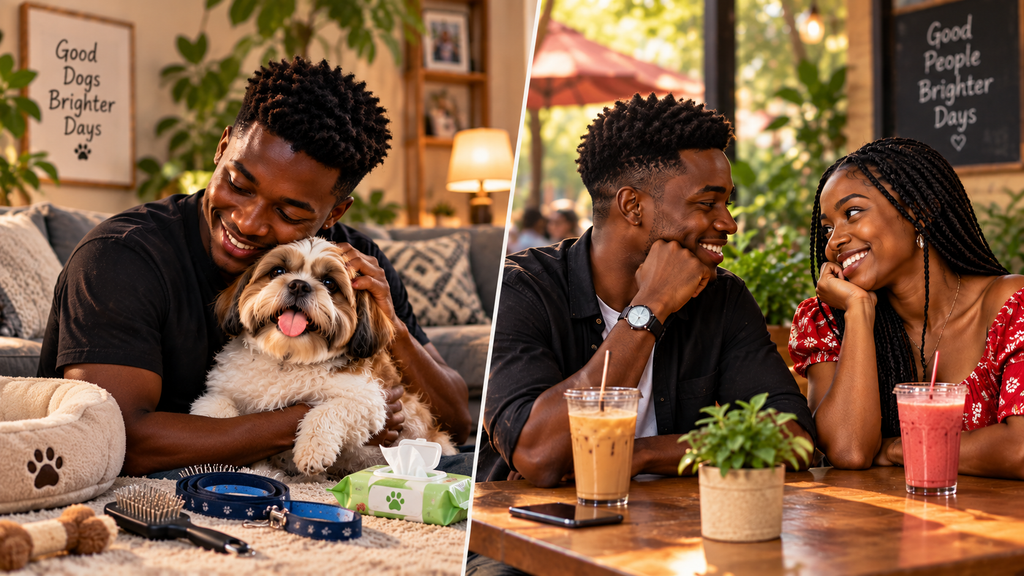
A young Ghanaian can be single without living an emotionally empty life. They can have close friends. They can remain connected to family. They can date. They can focus on work. And they can have a dog or cat that becomes part of their everyday world.
A pet does not need to replace marriage to become important. It simply provides a different kind of relationship.
Pet Parenting Can Bring Comfort Without Complicated Expectations
Human relationships come with expectations. Marriage brings responsibilities between two people and often connects two families. Dating can bring uncertainty. Family relationships can sometimes come with pressure.
A pet relationship is different. Your dog does not ask when you are getting married. Your cat does not compare your career with someone else’s. Your pet does not care whether your business succeeded this month. It simply recognises you.
For some people, that unconditional familiarity can be comforting. This is also why discussions around pets and mental health in Ghana deserve a balanced approach. A pet cannot cure depression or replace professional mental-health care. But companionship can still matter.
Having an animal around can reduce the feeling of an empty home, create routine, and provide moments of affection during an otherwise stressful day. Sometimes emotional support does not have to be complicated. Sometimes it is simply a warm body sitting beside you.
Pet Parenting Is Also Changing What “Family” Can Mean
Perhaps this is the biggest cultural shift. When a Ghanaian pet owner says, “This is my baby,” they may be speaking affectionately. But the phrase also reflects a changing emotional relationship with animals.
The Dormaa study’s finding that 80% of respondents considered their pets part of the family is particularly telling. The animal is no longer simply outside the house. It is inside the emotional life of the household.
- It may have a name.
- It may have its own sleeping place.
- It may be included in photographs.
- It may be missed when the owner travels.
- And when it becomes sick, the owner worries.
That is a relationship. Or perhaps, we can say a Pure relationship. Pets make us realize what a true relationship needs, where there is no place for misunderstanding. It can help with a successful married life also.
Ghana’s Pet Culture Could Become More Personal
There is plenty of room for Ghana’s pet culture to develop. Veterinary services, responsible breeding, adoption, pet education, and animal welfare can all become more important as people increasingly treat animals as companions. The interest is already there.
Research among pet owners in Accra found substantial interest in learning about healthy pet-keeping practices and using digital veterinary services. That presents an opportunity for Ghanaian veterinarians, animal welfare organisations, pet businesses and content creators.
Young people need practical information about feeding, vaccinations, training, exercise and responsible ownership. Because if pets are becoming family, they deserve to be treated like family.
Maybe the Question Isn’t Marriage or Pets
The title asks why pet parenting is becoming more important than marriage. But perhaps the reality is more positive. It may not be marriage versus pets. It may be about a generation that is learning that there are many ways to build a meaningful life.
Marriage can still be part of that life. So can friendship. So can career. So can independence. And, increasingly, so can a pet.
A young Ghanaian can decide that marriage can wait until the right person comes along. In the meantime, they can build a home, pursue their dreams, and care deeply for an animal. That does not mean they have rejected marriage. It means they have refused to believe that life has to remain empty until marriage arrives.
The New Ghanaian Pet Parent
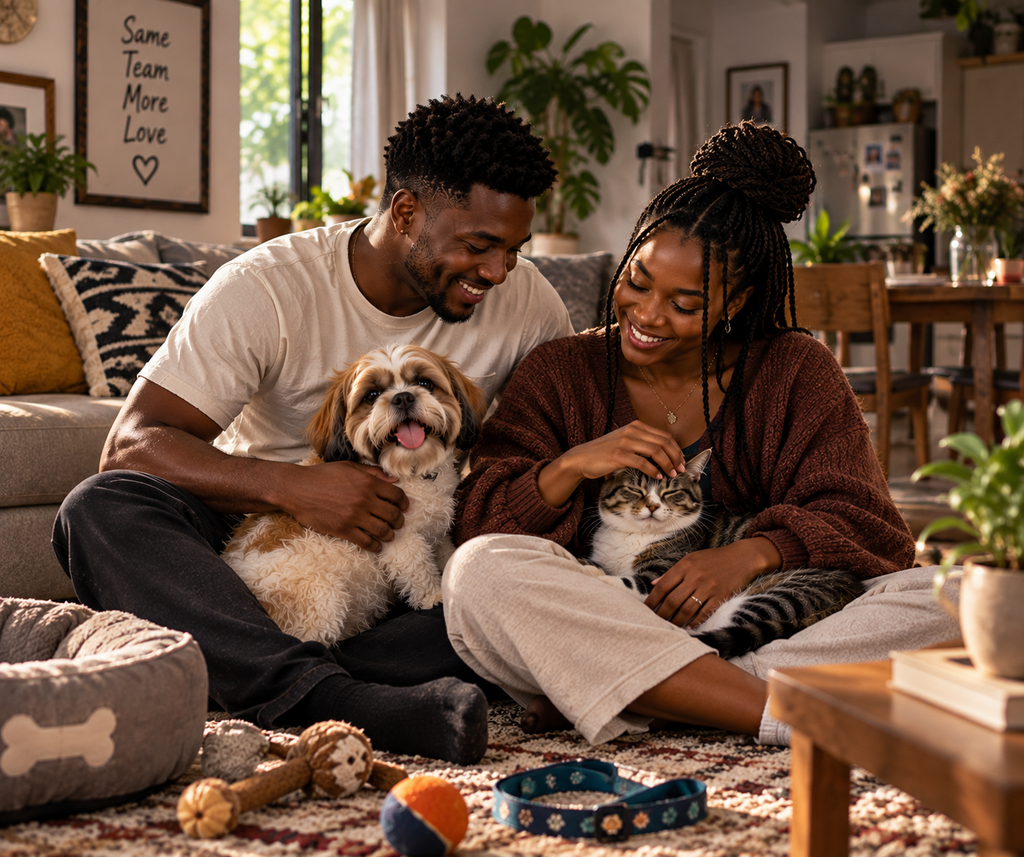
Perhaps the modern Ghanaian pet parent is not someone choosing an animal over a spouse. It is someone choosing companionship in the form that fits their life today. Maybe it is the young woman in Accra who comes home from work to her cat. Maybe it is the young man in Kumasi who takes his dog for an evening walk.
Maybe it is a student who finds comfort in caring for an animal while living away from home. Their stories may be different, but the underlying idea is similar.
“Companionship matters.“
Marriage may still be one of the most important relationships many Ghanaians hope to experience. But it does not have to be the only meaningful relationship along the way. And possibly that is why pet parenting is becoming part of the conversation.
Not because young Ghanaians have stopped believing in love. But because they are discovering that love, care, and companionship can take more than one form. Sometimes it arrives as a husband or wife. Sometimes it arrives as a best friend. And sometimes, unexpectedly, it arrives with four paws and a wagging tail.


