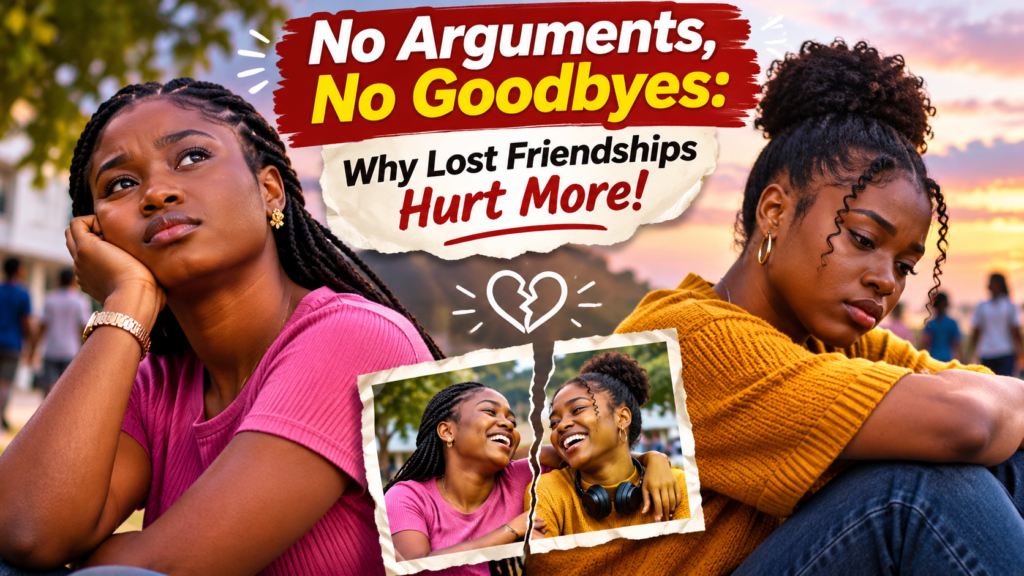
No Arguments, No Goodbyes: Why Lost Friendships Hurt More!
Lost friendships are a new term that could be easily seen everywhere but it’s not being in open discussion like breakups. It is a sadness that comes when someone who used to know almost everything about you starts to feel like a stranger: no arguing, no cheating, no big dramatic goodbyes. Fewer messages, missed calls, and conversations gradually become memories.
Maybe you still have their number on your WhatsApp. Maybe you check their Instagram stories once in a while or find an old TikTok that takes you back to the good old days. You smile a little. Then comes that feeling of unease: how can two people so close end up living completely separate lives?
Breakups in friendships may not get as much attention as romantic breakups, but they can be just as emotionally damaging. Changing lifestyles, career pressures, social media, and new relationships are throwing up situations where friendships sometimes drift away without anyone explaining why. Young people in Ghana and elsewhere are discovering this.
Here are some key situations that slowly make your friendship fade away.
Sometimes the hard part isn’t losing the person. It is losing the connection, but knowing exactly what it must have felt like to have them around.
1. From Daily WhatsApp Chats to Total Silence
Recall that friend who would text you every morning, send you funny TikTok videos, and call you just to talk about something completely unimportant.
Imagine that you open your WhatsApp chat and realise the last real conversation you had was months ago.
This is the common experience of contemporary friendship. WhatsApp groups that have hundreds of messages can suddenly go quiet. Birthday wishes get shorter, voice notes stop, and even simple questions like “How are you doing?” stop coming.
In Ghana, where WhatsApp is a common tool for everyday conversations, these small digital exchanges can be important for keeping up with friends.
But being online with each other doesn’t always mean being close in real life.
You can still follow someone on Instagram, like their photos, and watch their WhatsApp status, but you no longer know what is happening in their personal life.
Friendship is not officially over. It’s simply not friendship anymore.

2. The People You Love Become Strangers
The most difficult part of losing a friend is getting used to the fact that someone who knew your daily routine has no clue what’s happening in your life.
You know their favourite foods, you know the stories of their family, their career goals, even the little things that made them laugh.
But now, when something exciting happens in your life, they are not the first person you think of calling.
Take, for instance, the fictional story of Ama and Esi, two friends who met when they were both at the university in Kumasi.
They studied in groups, ate together, attended campus events, and helped each other through exams. After graduation, they had talked about taking a trip together.
After graduating from university, Ama found a job in Accra, while Esi remained in Kumasi to start her teaching career.
They made an effort to stay in touch at first. But work schedules got busy, weekends were busy, and their regular conversations disappeared.
Neither was wrong. They just got caught up in other people’s lives.
Years later, Ama came across an old photo of them and realised she missed the friendship more than she wanted to admit.
It’s one of the quiet truths of growing up. Sometimes people don’t leave because they stopped caring. It’s hard to have that connection, so they leave.
3. Instagram Highlights and the Feeling of Exclusion
Social media has made it more difficult to break up with your friends.
Back in the day, people who lost touch could slowly get over it, not always knowing what the other person was up to. Instagram, TikTok, and WhatsApp allow us to see somebody’s life almost on a daily basis.
You might run into your ex-best friend at a birthday party, on a trip to a different city, or on a weekend out with a whole new group of friends.
The pictures are gorgeous. Looks like everyone’s happy. But you know when you were the one standing next to them.
It can be an uncomfortable mix of sadness, curiosity, and even jealousy. You wonder if they replaced you or if you were just too insignificant to stay in their life.
The problem is that social media shows moments, not the entire story.
Research on friendship dissolution recognises that relationships can end via a gradual distancing, avoidance, or lack of continued effort rather than a direct conversation. In 2025, the Journal of Social and Personal Relationships published a review of the ways friendships end and how the emotional consequences of those ways can vary.
This difference matters for young people negotiating relationships online and offline. Just because someone is posting updates doesn’t mean you still have the closeness you had before.
4. When Money, Success and New Lifestyles Transform Everything
Not all friendships survive the change in financial circumstances.
The lifestyles, career opportunities, and responsibilities of people may be very different as they get older. One friend may land a good job with a good salary; the other is still in search of a job. Maybe someone will start travelling. Someone else is worried about rent or family.
Sometimes these differences create a gap between you that neither of you wants.

Think about Kojo and Daniel, two fictional childhood friends from Kumasi.
They grew up eating, playing football, and talking about their dreams. After school, Kojo got a job in the technology sector and started to live a more comfortable life.
Meanwhile, Daniel struggled to find a permanent job.
Kojo was always suggesting expensive restaurants or weekend getaways. “No,” said Daniel, “I’m busy. Eventually, Kojo stopped inviting him, believing Daniel wasn’t interested any longer.
What Kojo didn’t know was that Daniel was embarrassed about his finances.
Daniel, meanwhile, felt that his friend had changed, that he no longer understood his struggles.
Their friendship died slowly, not from fighting, but from not knowing how to talk about what was happening.
Sometimes a simple conversation can save a friendship from unnecessary misunderstandings.
5. War Under the Radar: Social Comparison in True Friendship
Another obstacle modern friendships face is the pressure to look successful.
It can feel like everyone on social media is moving at the same speed. Friends post updates about new jobs, big purchases, international vacations, business successes, and relationship milestones.
These updates can be inspiring, but also create a quiet competition.
Picture two friends who started together. One is promoted, the other remains in the same position. As a result, the second friend does not celebrate; instead, he starts to feel uncomfortable with each turn the conversation takes toward career accomplishments.
Real happiness can be tarnished by insecurity over time.
Now, that’s not to say that every friendship involves jealousy. But unspoken comparisons can affect the way people communicate and relate to each other.
Good friends can help each other grow without making a competition out of accomplishments.
6. Why It Hurts So Much to Lose a Friend Without Closure
There’s general agreement that something important happens when a romantic relationship ends. There could be a discussion or an explanation, or at least a knowing that the relationship is over.
But not all friend breakups are so clear or visible.
You could spend months trying to figure out if you did something wrong, if the other person is mad at you, or if they just forgot you.
Psychologists have a term for this: ambiguous loss. It is the grief that comes from losing someone alive, but no longer present in the way they once were.
A close friendship can give emotional support, a sense of belonging, and familiarity. And when that connection is gone, that can leave a real hole in the daily routine.
The 2025 review by Katya Santucci, Melanie Dirks, and John Lydon also points to the different ways in which friendships end, including drifting apart gradually, being ghosted, and direct communication. It also takes into consideration how the circumstances of the end of a friendship may influence its emotional and social consequences.
That’s why it’s sometimes so hard to move on without a proper goodbye.
It’s not just that person you’re missing. You’re trying to work out what happened, too.

7. The Birthday Message You Nearly Sent
Imagine it’s your ex best friend’s birthday. You open WhatsApp, and you type “Happy birthday!” and then you stop.
You wonder if the message would be accepted, ignored, or misunderstood. Maybe you remember the birthdays you celebrated together, the presents you gave each other, and the ways you made each other feel special.
In the end, you close the chat without sending a thing. Little moments like that can be surprisingly moving.
Sometimes people want to reconnect but are afraid to look desperate. Others believe the one who initiates contact is taking responsibility for breakups in friendships.
But friendship shouldn’t be a competition of who texts first.
If you really miss someone and think that the relationship was healthy, there’s nothing wrong with making the first move.
A simple text such as, “Hey, I was thinking about you. It’s been a while. How have you been?” can be a conversation starter without putting undue pressure.
They might reply warmly, or they might explain their absence or choose not to get back in touch. In any event, you have been honest in what you have said.
Lost Friendships: Can They Be Revived?
Not all friendships that fade have to be left behind.
Sometimes people get in touch after changing jobs, moving, or experiencing difficult personal circumstances. One honest conversation, and a friendship that has been asleep for two years might suddenly mean something again.
But reconciliation takes work on both sides.
Understanding why the friendship ended is important. Was it only a matter of time? Was it a misunderstanding that was never healed? Did one person feel unsupported the whole time?
For the connection to be rebuilt, both people have to be willing to speak openly.
Moreover, some friendships aren’t worth a second attempt. If you’re constantly being disrespected, manipulated, or just emotionally drained, it might be healthier to create distance.
The objective is not to revive every old friendship. It should be about deciding which relationships are worth saving.
Healing Without Becoming The Person Who Trusts No One
It’s easy to become cautious about getting involved with someone new when you lose a close friend.
You may tell yourself that you’ll never get too attached again or that it’s safer to keep people at arm’s length.
But don’t allow one bad friendship to dictate how you treat every relationship thereafter.

Give yourself time to take in what happened. If you’re unhappy, stop looking at someone’s social media. Connect with people who really enjoy having you around.
Also, some simple things you can try:
- Acknowledge your feelings: It’s okay to miss an old friend, and it doesn’t make you weak.
- Avoid unnecessary comparisons: Don’t view their new friends as a replacement for what you had.
- Talk straight: If you want closure, consider a quiet talk.
- Invest in relationships: Spend time with those who are consistently showing up.
- Try something new: Attend community events, join social groups, or pick up hobbies that put you in contact with new people.
- Respect changing borders: Friendships may not be as close as they used to be, but they can still be meaningful.
And most importantly, remember, meeting new people doesn’t mean replacing old friends. This means allowing yourself to feel new connections.
Conclusion: Not All Friendships Last Forever, But They’re Beautiful
The hard truth about friendship is that not everyone who comes into your life will stay there.
Some are with you for your college years, some help you with a difficult beginning of your career, and some become part of your most unforgettable memories. They are gone, but they are still important to you.
No arguments, no goodbyes, and sometimes no explanation. Some friendships die like that. If you miss someone who was once your favourite, remember you don’t have to turn the past into anger to move on.
You can hold on to the memories, acknowledge the pain, and still make room for new friendships. Because sometimes growing up is realising that people can be important chapters in your story without being in every chapter to come.
And that is perhaps the most beautiful thing about friendship. Even when the connection ends, the good memories need not.