Rise Again Ghana: Meeting the Challenge of Flooding in 2026
In Ghana, like other countries, the rainy season brings about different feelings for the residents. For some, it is the gentle sound of rain, filling rivers, making crops grow. But for some, especially families living in flood-prone communities, it means sleepless nights, anxious moments and the fear that everything they’ve worked for can be gone in a matter of hours.
The recent floods that have hit parts of Ghana have once again served to remind the nation of how mighty nature can be. Streets became rivers, homes flooded, businesses shut down, and many families were looking for safety, not shelter. Some lost loved ones while countless others lost precious memories, personal possessions and the comfort of a place once called home.
Our thoughts are with every family that mourns a loss or starts the difficult journey of rebuilding. But no article can ever replace what has been lost; as a nation, we can stand together with compassion, support one another and learn valuable lessons that will help protect lives in the future.
Floods are more than just heavy rain
Flooding is often termed a natural disaster, but to many Ghanaians it is personal.
When a home is flooded, it’s about more than just the home. It can contain years of hard work, family photographs, children’s school books, business equipment, important documents and memories that cannot be replaced.
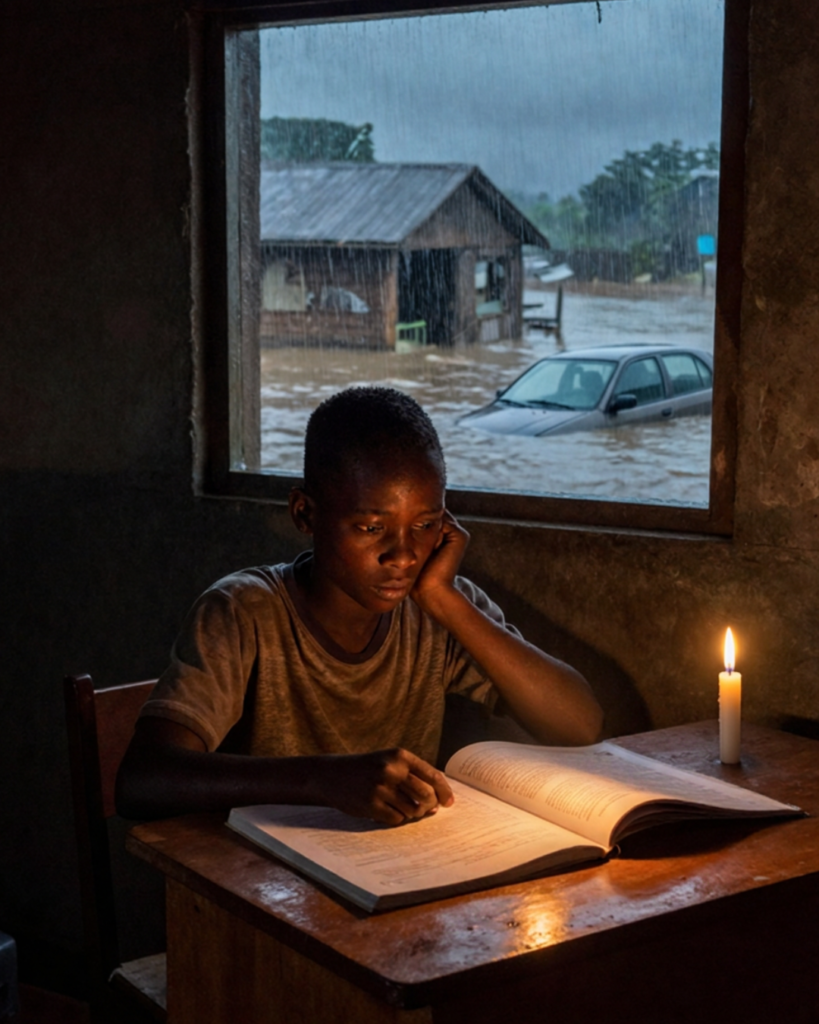
Floods mean traders lose the goods that bring in their daily income. Water levels can rise and wash off months of hard work for farmers. Children may not study properly and go to school or university. Likewise, elderly people won’t get their medicines and care on time.
The hard work often does not end even after the floodwaters go down. Families start cleaning mud-covered homes, repairing damaged buildings, replacing lost belongings and trying to return to some sense of normal life.
That is why it is important to remember that floods are never just a weather event. Their effects stay even after the floods end. However, by knowing our areas properly, we can help each resident with timely care and approach.
Communities That Are Often at Risk of Flooding
Flooding can occur in almost any part of Ghana during heavy rains, but some places are more at risk due to the terrain, drainage or proximity to rivers and the coast.
Accra Region
Heavy rain periods often cause flash flooding in many communities, particularly in low-lying neighbourhoods where drainage systems become uncontrollable. Busy roads can soon become dangerous, disrupting transport and emergency services.
Central & Western Districts
Communities along rivers, lagoons and the coastline may experience flooding following prolonged periods of rain. Coastal erosion and rising water levels present greater challenges for residents.
Ashanti and Eastern Regions
Heavy rains can cause streams to overflow and some hillside communities to have landslides or erosion as well as flooding.
Northern Ghana
Although the nature of rainfall changes, many communities living in this region are at risk of seasonal flooding from rivers and dams. Getting ready early is normally the best defence before the heaviest rains set in. Flood preparation benefits all households, regardless of where people live.
To Each Family Affected: You Are Not Alone
The people of Ghana have always been one of the country’s greatest assets.
Neighbours open their doors to strangers in every big emergency. Churches, mosques, community groups, youth volunteers, security agencies, health workers and emergency responders all work tirelessly to help those in need. Kindness is often the light that shines through difficult times.
Every Ghanaian makes sure that they provide short-term shelter, donate food, help clean up flooded homes or simply check on an elderly neighbour, reminding the affected families that they are not alone in the process of recovery. Sometimes hope starts with something as simple as knowing someone cares.
Before the Rain: Getting Ready to Save Lives
“Floods can’t be stopped, but we can all do our part to mitigate the risk before the floods come.”
Steps for Preplanning:
✓ Follow weather forecasts and official emergency updates.
✓ Review your community’s flooding history. Find the safest way to higher ground.
✓ Keep important documents in waterproof bags.
✓ Keep emergency phone numbers posted where everyone in your family can see them.
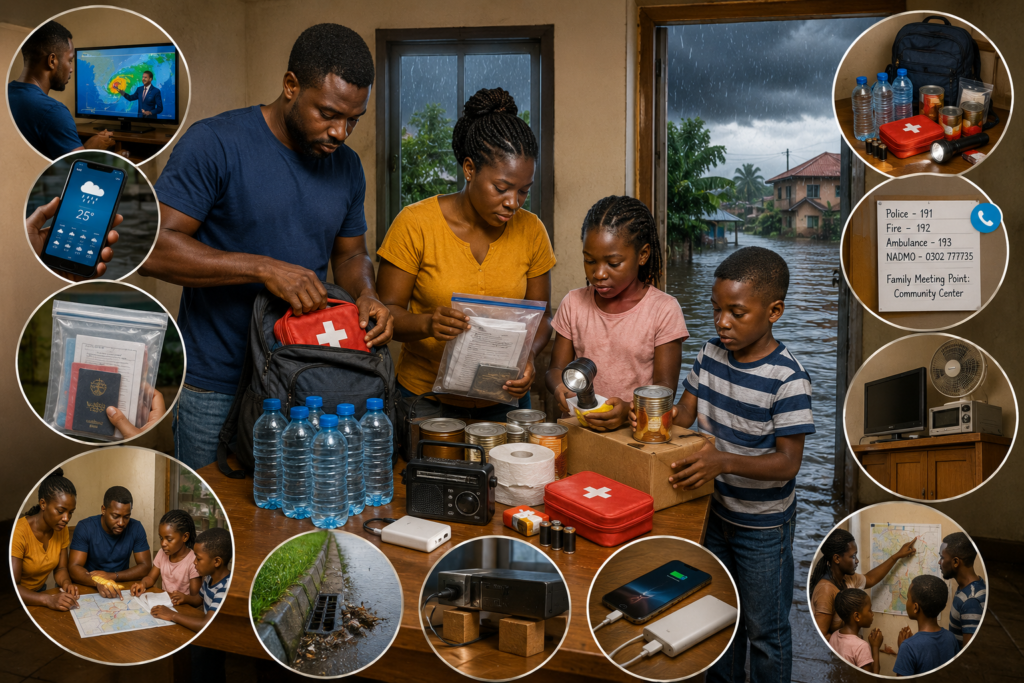
✓ Make a simple emergency kit with:
- Adequate Drinking Water Supply
- Food (non-perishable)
- Torch Batteries
- Kit of First Aid
- Power Bank
- Numbers Authorities
- Wireless internet on the go
✓ Charge up your phones and laptops in preparation for heavy rain.
✓ Raise electrical appliances and valuables to higher ground if flooding is possible.
✓ Keep drains around your home free from dust and debris.
✓ Talk with your family about where you would go in an emergency.
Ensuring these steps will help you survive during floods.
Safety Advice During Floods
Floodwater is often far more dangerous than it looks. Open drains, broken roads, sharp objects, and electrical hazards are hidden even in shallow water. It’s important to take these measures to make yourself and your family safe. These are:
✔ Don’t drive or walk through moving flood water.
✔ If water enters your home, switch off electricity if safe to do so.
✔ Only listen to information from trusted emergency authorities.
✔ Prioritise the protection of children, elderly relatives, pregnant women and persons with disabilities to safer places.
✔ Stay clear of downed power lines and electrical equipment that has been compromised.
✔ Don’t allow children to play in flood water.
Always remember, floods can come and go, but these small measures we take save us for years.
When the Floods End
The rain stopping does not mean the danger is over. Floodwater can leave behind dangerous bacteria, chemicals, insects, snakes and damaged buildings.
Back to home:
✔ Use caution when entering buildings.
✔Structural damage? Check before entering.
✔ Throw out any food that has come in contact with flood water.
✔ Boil or otherwise treat the drinking water carefully.
✔ Wash hands and face completely with clean water.
✔ Use gloves and boots when cleaning.
✔ Clean and disinfect floors and surfaces in the home.
By following these simple practices, you can be sure of protecting your loved ones from illnesses, such as diarrhoea, fever, skin infections or breathing problems.
Citizens Corner: Responsibilities To Carry for Future Safety
It’s not always the responsibility of authorities to make sure that every resident is safe. We as locals should also take simple steps to make our Nation beautiful like always.
Residents can:
- Have periodic drain cleaning sessions.
- Do not put disposals in gutters and waterways.
- Report blocked drains immediately.
- Establish neighbourhood emergency contact groups.
- Engage in community awareness programmes.
- Assist families in recovering from disasters.
Also, schools, colleges and other educational institutes should teach students about disaster safety and social welfare at an early stage to ensure Ghana will always be a dignified and cultured country.
This flood of 2026 is a reminder that cleaner drains, better waste disposal, safer building practices, stronger community cooperation, and timely weather information all help reduce the number of disasters in the future.
While government agencies under the guidance of the Honourable President John Mahama are always working to improve infrastructure and emergency response systems, every citizen has a role to play. Preparation isn’t about expecting the worst; it’s about giving ourselves the best chance to stay safe.
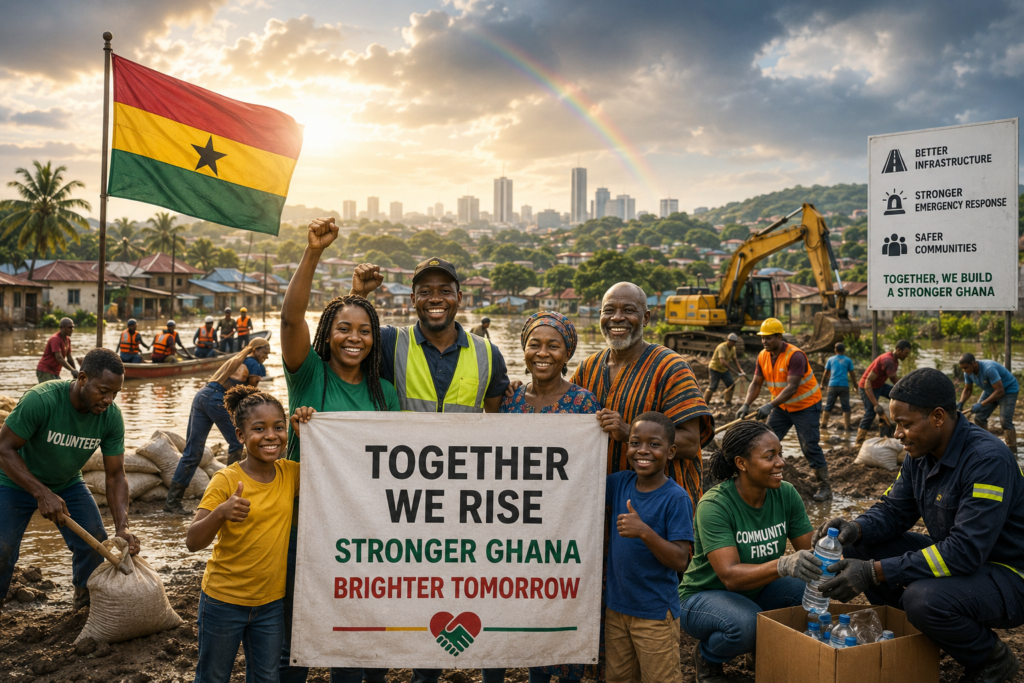
Ghana Shall Rise Again
Floods may wash away roads, homes and businesses, but they cannot wash away the courage that defines the Ghanaian people.
“Communities have demonstrated their resilience time and time again. Families help each other rebuild. Volunteers come forward without any expectation of recognition. Health workers, emergency responders, faith groups and ordinary citizens have come together for one aim: to save lives and restore hope.
As the rainy season goes on, let us remember those who have lost loved ones, those who are rebuilding their homes, and those who still face uncertainty. Let us be kind wherever we can, whether it is a helping hand, a donation, a prayer, or just checking in with someone who might need support.
Through compassion, preparedness and unity, Ghana can grow stronger with every challenge it faces.
Rain can challenge communities, but it also reveals something even more powerful: the unbreakable spirit of Ghana and the Ghanaians who always find the strength to stand together.