Ghana In BRICS Partners: How It’s Related to Better Youth Growth?
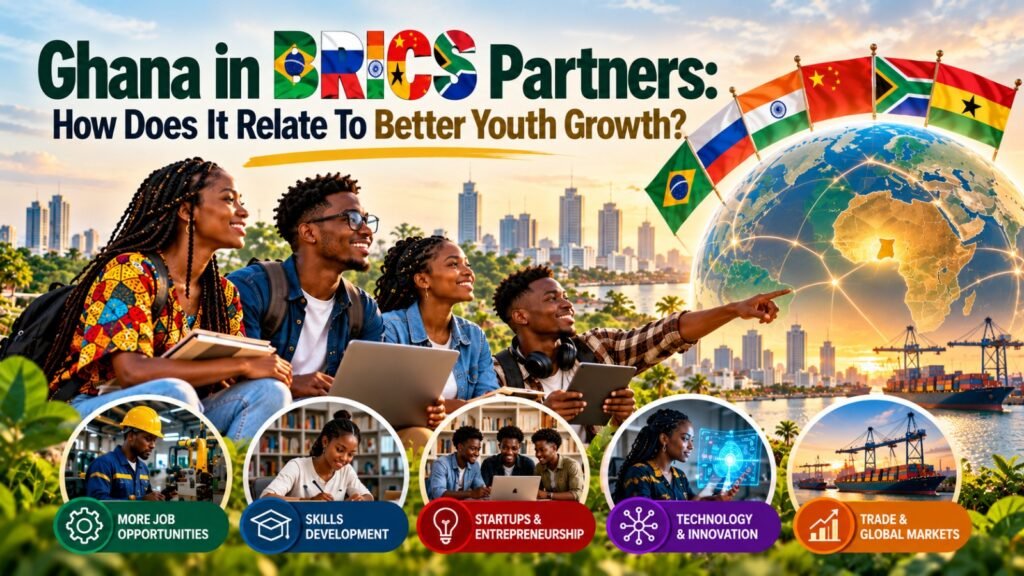
Ghana is beginning a new chapter in its international relationships, and the youth might be an important part of that story. As the country looks forward to deeper cooperation with emerging economies, the debate around Ghana in BRICS has raised issues of jobs, education, entrepreneurship, technology, and the future of economic growth.
For many young Ghanaians, the key question is not whether Ghana joins an international grouping. The question is whether the decision can create meaningful opportunities at home. Would closer cooperation with BRICS partner country or countries help young people to start businesses, develop professional skills, find decent jobs and be part of a more competitive economy?
These are options worth looking at, but expectations need to be realistic. International partnerships alone do not generate jobs or prosperity. Their worth is determined by the deals made, the investments made, and the opportunities extended to ordinary citizens.
BRICS: What is it and why is Ghana interested?
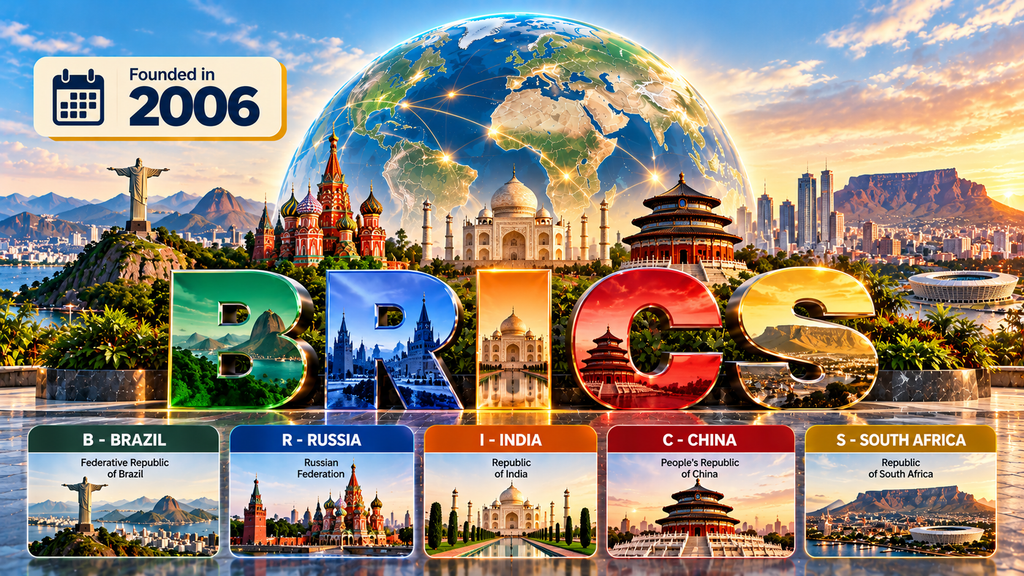
BRICS is a grouping of large emerging economies that provides a forum for cooperation on economic development, international trade, and global governance. It was originally an acronym for Brazil, Russia, India, and China, plus South Africa. The group has grown since then.
For Ghana, increased engagement with BRICS could open up another avenue to generate relations with countries with large experience in manufacturing, digital services, infrastructure, agriculture and technological development.
Ghana’s Cabinet approved a plan in October 2026 to seek BRICS Partner Country status, as per the government’s Information Services Department. Ghana’s Foreign Affairs Minister Samuel Okudzeto Ablakwa said the country would ask for partner status, rather than full membership for now.
President John Dramani Mahama said the proposed partnership would widen trade and investment opportunities, deepen cooperation with emerging economies, and support industrialisation.
The government’s approach has been to not walk away from existing partners but to diversify international relationships.
This is important for young people because the international relationships a country has can affect access to markets, investment, technical knowledge, and professional networks. But the potential benefits depend on whether the diplomatic talks translate into actual programs and definite results.
Ghana in the BRICS: What is the status as of October 2026?
The important thing is to distinguish between the intention of a country to apply and its formal admission.
Ghana said it plans to apply for BRICS Partner Country status from October 2026. It is not yet confirmed as an entry in the official list of BRICS partner countries.
BRICS is a framework with full members and partners. Partner countries may be invited to participate in selected summits and ministerial meetings. Partner countries may participate in other activities as provided for in the relevant arrangements and by agreement among members.
BRICS member countries as of today
There are 11 full members of BRICS, according to the official BRICS website:
- Brazil
- China
- Egypt
- Ethiopia
- India
- Indonesia
- Iran
- Russia
- Saudi Arabia
- South Africa
- United Arab Emirates
Current partner countries of BRICS
The official website of BRICS lists 10 partner countries:
- Belarus
- Bolivia
- Cuba
- Kazakhstan
- Malaysia
- Nigeria
- Thailand
- Uganda
- Uzbekistan
- Vietnam
These are not the same categories. Partner country status is not full membership, and neither category is a guarantee of access to specific loans, scholarships, or employment programs.
The proposed application by Ghana is thus indicative of a potential new path of cooperation, and not a final transition. Readers can visit the official BRICS website and Ghana’s Information Services Department for updates.
How can the youth benefit from a Ghana–BRICS partnership?
As the discussion moves from diplomacy to everyday economic opportunities, the relationship between international cooperation and youth development in Ghana becomes clearer.
1. Industrial Growth and More Employment Opportunities
Youth unemployment and underemployment remain major challenges in Ghana. A growing economy needs productive industries that can employ people with different education and skill levels.
Closer cooperation with Ghana-BRICS relationship economies could potentially provide support for investment in manufacturing, agro-processing, construction, renewable energy, and other productive sectors.
Local food processing investment might create jobs for machine operators, engineers, quality-control specialists, accountants, logistics workers, and marketing professionals. If local investment projects are developed, there could be similar opportunities in mineral processing and other sectors.
The main concept is to generate employment in Ghana and not just to increase import or export raw materials.
But new jobs would depend on real investment, possible businesses, and appropriate employment policies. A diplomatic partnership by itself cannot guarantee the emergence of these opportunities.
2. Improved Skills Development and Technical Education
Employers need skills to boost more inclusive economic growth for young people.
BRICS countries have expertise in information technology, engineering, advanced manufacturing, agricultural technology, and scientific research. Technical training, joint research, academic exchanges, and professional development could be facilitated through cooperation with institutions in these countries.
Possible areas include vocational training, robotics, software development, renewable energy systems, digital payments, and modern farming techniques.
Technical skills development can equip Ghanaian students and young graduates to better compete for jobs in the increasingly technology-driven economy.
The government, universities, and training institutions would need to negotiate specific programs, secure funding, and ensure that opportunities are available to more than a handful of students. Scholarships and exchange programs should be considered as possibilities till they are officially announced.
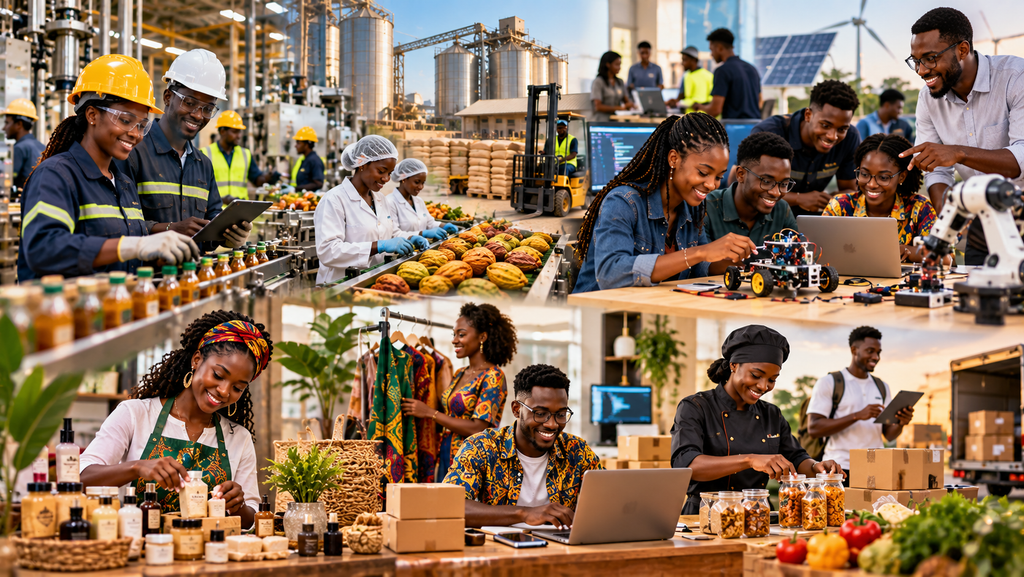
3. New Business Opportunities for Young Entrepreneurs and Startups
Young Ghanaians are increasingly interested in setting up businesses in fashion, food, tourism, creative industries, e-commerce, and digital services. But entrepreneurs often have difficulty obtaining funding, equipment, business networks, and access to customers.
A stronger Ghana–BRICS relationship would provide local businesses with access to investors, suppliers, technology providers, and international markets.
Imagine a young entrepreneur in Accra producing locally made skin care products or packaged foods. With the right export standards, financing, and distribution partners, the business could reach customers beyond Ghana.
Similarly, a technology start-up may seek technical collaboration or commercial partnerships with firms in the BRICS economies.
Such opportunities could promote youth entrepreneurship in Ghana, but this would still require solid business planning, reliable infrastructure, access to finance, and compliance with the regulations of target markets.
4. Digital Innovation and Technology Transfer
Technology can help young people work smarter, develop new services, and reach customers across borders.
Cooperation with BRICS partner country or countries could potentially open up access to technical knowledge in artificial intelligence, software engineering, telecommunications, digital banking, agricultural technology,y and clean energy.
For instance, research partnerships could be beneficial to local developers, while agricultural startups should consider products that enable farmers to monitor crops, water, or supply chains.
The most useful technology transfer in Ghana would be that which builds up local capacity rather than creating a long-term dependence on imported equipment and foreign expertise.
Training, local research, maintenance skills, and knowledge-sharing arrangements would all be important. Ghanaian youth should be given the opportunity to use new technologies as well as develop, adapt, and maintain them.
5. Better access to international markets
International trade can offer young people opportunities to make goods and provide services.
Ghana’s exports could include processed cocoa products, agricultural products, textiles, creative products and selected digital services. More cooperation in the Ghana-BRICS relationship could help businesses find new buyers, learn about market needs,s and create international distribution relationships.
More trade can also create work in logistics, accounting, translation, digital marketing, packaging, quality assurance, and supply-chain management for young professionals.
But access to a market does not necessarily mean sales. Companies have to meet product standards, control shipping costs, know tariffs, and work with established providers.
Thus, a successful approach to Ghana export opportunities would be to combine international engagement with support to local producers.
What challenges does Ghana have to face?
While the proposed partnership has reasons for optimism, the benefits will not be intuitive.
First, education and skills gaps could prevent young people from accessing new opportunities if training does not meet the needs of employers.
Second, local producers may lack access to affordable finance, modern equipment, and reliable infrastructure and might be unable to compete if imported goods become more accessible.
Third, investment agreements must safeguard Ghana’s long-term economic interests. Projects must add local value, encourage responsible employment, and avoid unsustainable financial commitments.
Moreover, young people need to know clearly what opportunities are available. However, if scholarships, training schemes,s or business-support programs are introduced, clear eligibility criteria and fair selection processes will be essential.
Finally, Ghana needs to pursue a balanced foreign policy. It does not need to drop its existing international relationships to cooperate more strongly with BRICS. Diversification is most useful if it increases Ghana’s options, while enabling it to make its own decisions.
The extent to which cooperation between Ghana-BRICS relationship and youth development is practically connected will be determined by these considerations.

What Should Young Ghanaians Do Now?
Young people do not have to wait for a final decision on Ghana’s partner-country application to get ready for opportunities in the future.
Students are able to improve their online literacy, communication skills, and technical knowledge. Graduates will find opportunities in manufacturing, logistics, agriculture, technology and international commerce. Entrepreneurs enhance the quality of their products, their financial records, their online presence, and their understanding of export regulations.
Universities, professional associations and business organisations can also monitor official announcements and identify trustworthy opportunities for collaboration.
Above all, young people should differentiate verified programs from online speculation. Ghana’s announcement that it is pursuing BRICS partner status does not mean applications for BRICS scholarships, jobs or business grants are open.
Preparation is good. But decisions about education, careers and investments should be made on the basis of information that you know to be true.
Conclusion: Can Ghana in BRICS Build a Better Future for the Youth?
At the end of the day, the discussion on Ghana in BRICS is about more than global diplomacy. It raises a broader question about how Ghana can use its global relationships to strengthen local industries, expand skills development, and create opportunities for its growing youth population.
As a partner country, it provides another route to economic cooperation, knowledge sharing, and international business links. Those possibilities will translate into real benefits depending on the agreements Ghana is able to negotiate to attract investments, and the policies it implements at home.
For young Ghanaians, the most meaningful outcome would be an economy that offers greater access to skills, productive employment, entrepreneurship, and innovation.
The true indicator of success will not be the mere declaration of partnership. It will come down to whether young people can see and feel the benefits in their education, businesses, workplaces,s and communities.