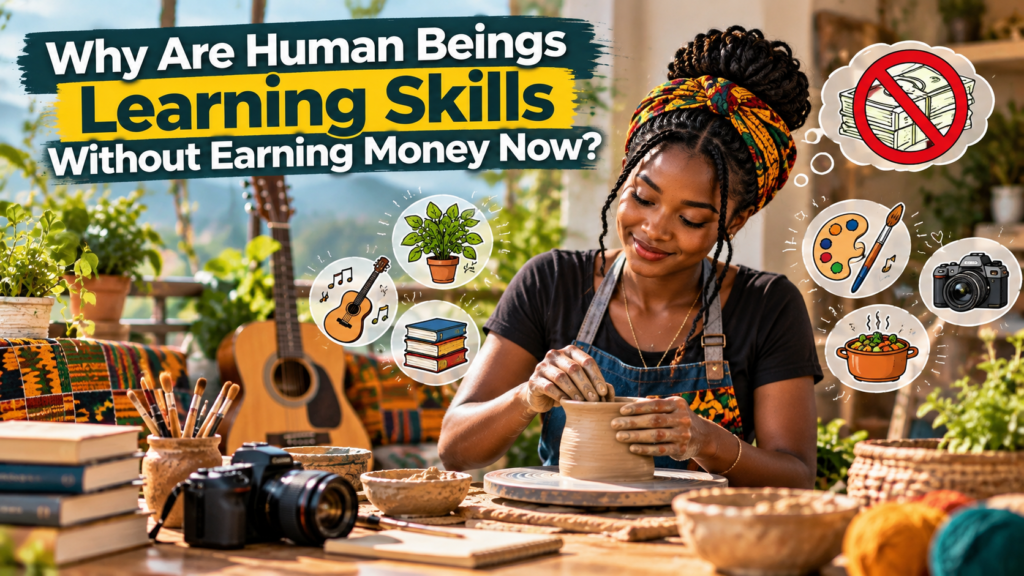
Why Are Human Beings Learning Skills Without Earning Money Now?
In a world where almost everything is attached to income, productivity, and career advancement, a fascinating question is rising to the forefront: why are people learning skills they might never use to generate income?
A person might spend months learning pottery without a plan for selling even one cup. Someone else might learn guitar but never play on stage, learn gardening but never open a nursery, or study a foreign language but never move abroad. These activities may not increase their salary, customers, or social media following. And yet people continue to invest time, and sometimes money, in them.
This change in the relationship with personal interests reflects a broader discussion about choice in modern lifestyles, individual self-fulfilment, and what success means. Some are discovering the joy of doing things just because they like them, as digital platforms make it easier for people to turn talents into businesses.
Perhaps the most interesting thing is that learning doesn’t always have to have a financial return to make life richer.
Learning Skills On The Rise Without Making Every Hobby A Business
For years, people have been urged to make productive use of every spare minute. If you love cooking, you can start a food business. If you like to take photos, you can become a content creator. Even reading, fitness, and travelling can be opportunities to build a personal brand.
There’s nothing wrong with making money from a passion. For many, a side hustle is financial security, and the creator economy has opened up new opportunities for talented people. But the constant drive to monetise interests can turn leisure into just another job.

A hobby that starts with curiosity can slowly become linked to deadlines, customers, online interaction, and financial expectations. Instead of asking if an activity is fun, people start to ask if it is profitable.
That is why the idea of unmonetised hobbies is worth attention. People can learn skills without the assumption that every new interest has to be a pay cheque. It’s not to reject ambition, but to make room for things that exist beyond financial objectives.
What People Want From Their Free Time Besides Money?
We can’t deny the fact that money matters. It pays bills, supports families, and creates opportunities. But people don’t just go after an interest for the money.
Learning a new skill can provide a sense of progress that may be lacking in the repetitive daily tasks. Someone who spends the working week answering emails might find satisfaction in growing vegetables, repairing furniture, or learning to paint.
These actions provide a different sort of achievement. One can see progress, unique and often irrespective of professional recognition. This corresponds to the growing interest in personal growth, meaningful leisure, and work-life balance.
Rather than measuring every accomplishment by pay or position, people may start appreciating the experience of becoming more capable. The process itself can be a rewarding one. Learning to play a hard piece of music, preparing a complicated recipe, or completing a handmade object offers a chance to see improvement.
Some achievements don’t require an audience. Sometimes it is enough to know that you can do something today that you couldn’t do six months ago.
Can Learning Skills Improve Well-being in Everyday Life?
A busy lifestyle often doesn’t leave much space for activities that require patience. People move back and forth between work, household chores, notifications and entertainment, often without feeling that they have done anything personally meaningful.
A practical hobby can break the pattern. Creative hobbies such as drawing, writing, sewing and pottery offer people an opportunity to concentrate on one task. It is quite different from sitting in front of a screen for hours to take part in physical activities such as dancing, gardening and woodworking.

For some, having an activity that promotes slowing down makes mindful living easier. Instead of hurrying toward a finished product, they learn to value the small decisions and mistakes of the process.
Such experiences are not a substitute for professional mental health support. Their value is simpler: they can provide
- fun structure,
- curiosity,
- and a break from routine.
Also, a hands-on skill could be a positive change of pace for someone who works with digital information for most of the day.
How Social Media Transformed The Meaning of Hobby?
Social media has made learning easier than ever. People can watch tutorials, join online communities, find unknown crafts, and learn from experts around the world. At the same time, digital platforms can give the impression that all interests should be visible and commercially valuable.
When a person starts baking, they may soon hear advice about selling products. Photography can be encouraged to build a portfolio, attract followers, and approach clients. Even fitness and reading can become competitive when progress is always on display and being compared.
This is where the important part of the discussion comes in: digital wellbeing and social media pressure.
The developing discussion around “hobbymaxxing” is a reminder of how people, especially young adults, can approach leisure with the same zeal that they bring to work. Recent reporting has also asked the question of whether too much tracking, optimisation, and monetisation can ruin the original intent of a hobby.
The answer is not to stop using social media or to stop sharing your achievements. Remember that an activity can be meaningful even when no one sees it. A painting doesn’t lose its value because it never gets posted online. A song doesn’t have to have thousands of views to be worth playing.
Why Are Learning Skills Important in the Artificial Intelligence(AI) Era?
The promise of artificial intelligence (AI) is changing how people work and learn, making acquiring new skills more essential beyond the traditional classroom and office setting.
The OECD’s 2026 report on informal learning looks at how people develop abilities through their daily activities, social interactions, hands-on experiences, and self-directed exploration. It also looks at the growing importance of learning outside of formal education, as technology and work practices evolve.
Not all skills need to be digital, technical, or career-related. Learning to fix a household item, grow food, speak another language, or understand basic electronics can all help make daily life more manageable. Creative work can also promote experimentation and help people get used to failure.
Crucially, lifelong learning does not have to be about getting certificates or preparing for another examination. It can simply mean being curious about the world. AI tools can assist with this by the following:
- explaining concepts,
- suggesting exercises,
- and helping beginners to practise.
But the learner still has to engage, experiment, and make their own judgement. It’s not about competing with the technology everywhere. It is to stay interested, flexible, and open to discovering new things.
Is Learning A Privilege Without Considering Money?
While considering this statement, we have two sides of people. Not everyone has the time, money, or energy to pursue an interest without thinking about how much it is worth. But if you’re managing a household budget, supporting children, or holding down multiple jobs, it’s reasonable to expect that you’ll lean toward activities that have the potential to boost your earnings.
Access is important, too. Some hobbies require expensive equipment, special facilities, or paid instruction. Even an apparently affordable activity may involve transport, materials,s and time away from responsibilities. So intentional living should not be yet another benchmark by which people measure themselves.
Nobody who learns a trade to support a family is less fulfilled than someone who learn skills of painting for fun. Likewise, a person who has made a successful business out of a hobby has not necessarily lost its meaning.
The question is whether making money is an obligation that all interests must meet, or a possibility that people can choose to pursue when it suits them.
Free tutorials, public libraries, community groups, shared tools and local workshops can make learning more accessible to those who want to experiment without a large financial commitment.
5 Skills You Can Learn Without Intending to Monetise Them
You don’t need a long, drawn-out plan to begin. Find some activity you are passionate about and allow yourself to be a beginner.
1. Gardening: Discover how to grow your own herbs, vegetables, or indoor plants. Begin with a small number of plants and learn the needs of each individual plant.
2. Drawing or painting: Practice simple shapes, draw everyday objects, or play with colour. The idea is to have fun, not make professional artwork.
3. Make traditional recipes: Find a family recipe, learn another culture’s cuisine or improve a basic technique. These learned skills can also help to sustain cultural knowledge.
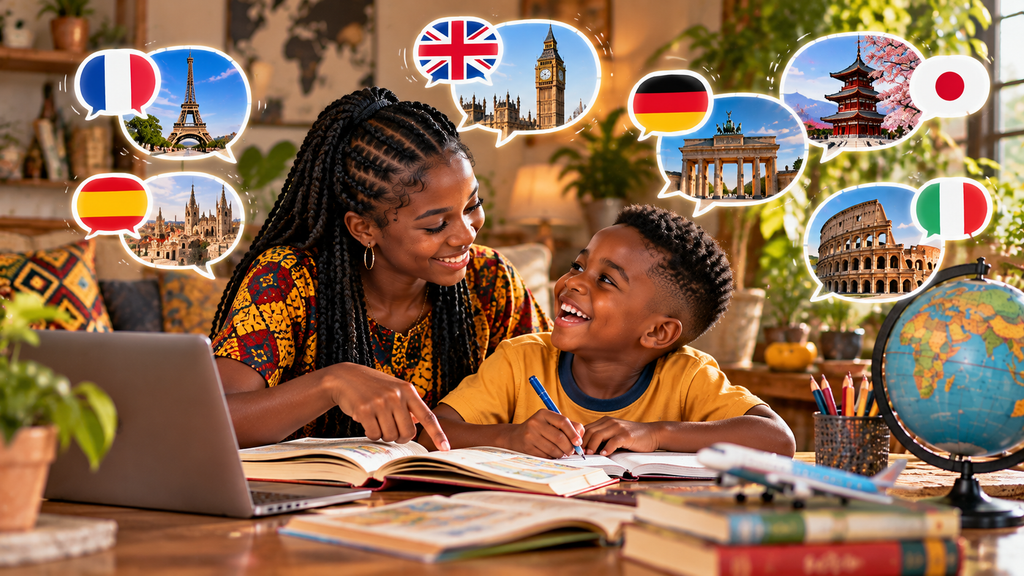
4. A new language: Learn some phrases each week, listen to people talking, and practise speaking. Even if you never visit a country where the language is spoken, progress is still worth it.
5. Repair and practical crafts: Give simple sewing, basic furniture restoration, or other beginner-friendly DIY projects a try. Use tools or electrical equipment safely in line with appropriate guidance.
These creative hobbies and practical activities can be woven into daily routines. You don’t need to be an expert, buy expensive equipment, or publish your results publicly. The trick is to choose something you really want to explore.
The Future of Self-Development Might Be Less About Productivity
Professional success, financial security and specialised knowledge will continue to be rewarded in modern life. They are still important goals, but they don’t have to define every hour of the day.
There’s been more talk of slow living, intentional hobbies and lifelong learning.
A useful question: what if some of our time could be valuable, without being profitable?
Suppose you acquire an instrument simply because you love music. Think of growing tomatoes because you like to see them grow, or studying history because you want to know more about the world.
None of these activities need to be a business to be able to justify their existence. Learning skills without making money isn’t necessarily a rejection of ambition. It can be a way of keeping alive the curiosity in a society that often tells people to weigh their worth by what can be seen.
The next time you want to learn something new, you don’t need to start by asking how much it might pay.
You could begin with a simpler question: Would I enjoy learning this if I weren’t getting paid to learn it?
Sometimes that’s reason enough to begin.