
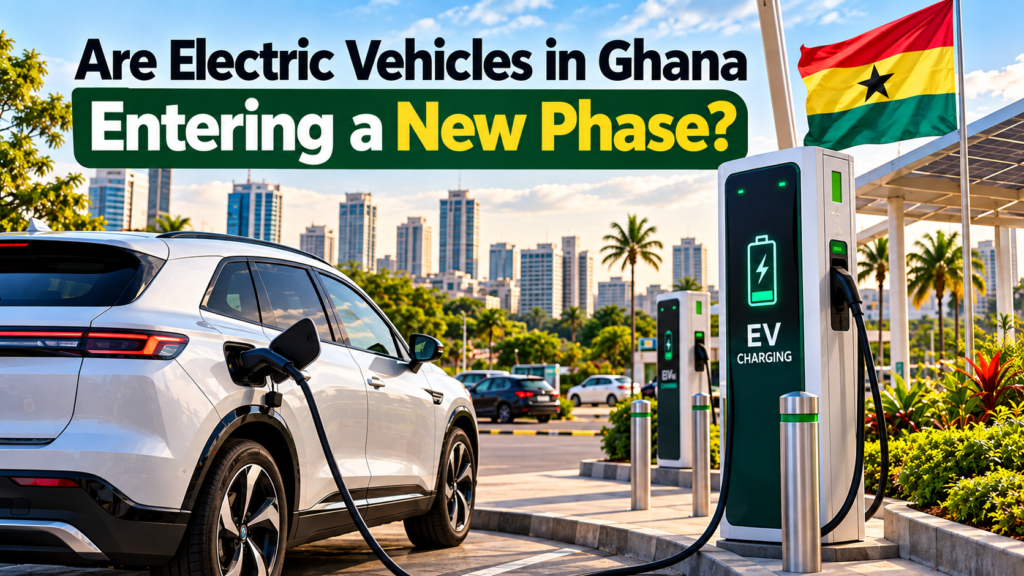
Are Electric Vehicles in Ghana Entering a New Phase?
Electric vehicles in Ghana are not some futuristic idea that is discussed at international climate conferences. They are starting to be seen on regular roads in Ghana, and firms are looking at charging stations, battery swap services, and electric transport solutions. But before this transition is a bigger question: are Ghanaians ready for the electric vehicle revolution?
And the answer is not a simple yes or no. Ghana has begun some of the necessary groundwork, but issues of affordability, charging infrastructure, electricity supply, technical skills, and consumer awareness still need to be addressed.
The latest developments suggest a change from discussions about electric mobility to setting down rules and building the infrastructure to empower it.
Why Electric Vehicles Are a Growing Topic in Ghana
Ghana’s economy relies heavily on transport. People use cars, taxis, buses, motorcycles, and commercial vehicles every day. Businesses use road transport to move goods. This makes the transition to electric mobility much more than just replacing petrol cars with electric cars.
The Ghana Clean Transportation Outlook in 2026 stated that the transition to clean transportation in the country is still at its basic and uneven stage. The report said the major barriers include high upfront vehicle costs, limited financing, and electricity tariff uncertainty.
However, there are also economic benefits. Electric cars can cut dependence on petrol and diesel, and may lower running costs for some users. This is particularly interesting for commercial transport operators who drive long distances every day.

Ghana’s EV Charging Infrastructure Moves to a New Phase
One of the biggest questions about electric vehicles in Ghana is simple: where will drivers charge them?
A petrol station can fill up a regular vehicle in a matter of minutes. Charging an EV is a different experience, depending on the charger type and capacity. The Energy Commission of Ghana is now working to build a more structured charging ecosystem. The framework includes aspects such as safety, licensing, and registration.
The Commission is also developing a national platform for the management of EV charging systems. The platform would provide information on licensed charging stations, energy consumption, faults, outages, and geographic coverage. That could eventually make it easier to plan charging and give drivers a better view of the network available.
Is Ghana’s Electricity Grid Ready for More Electric Cars?
This is where the EV conversation turns into an energy discussion.
An electric vehicle doesn’t generate energy demand out of nowhere. It moves some of the energy used for transport onto the electricity system. If thousands of vehicles start charging at once, especially at high-powered fast chargers, the electricity infrastructure will have to deal with the additional demand.
Ghana’s Energy Commission has therefore underlined that charging infrastructure cannot be developed in isolation of the electricity network on which it relies. That’s what regulation is for. The goal is not just to build as many charging stations as possible, but to place and operate them in ways that the grid can support.
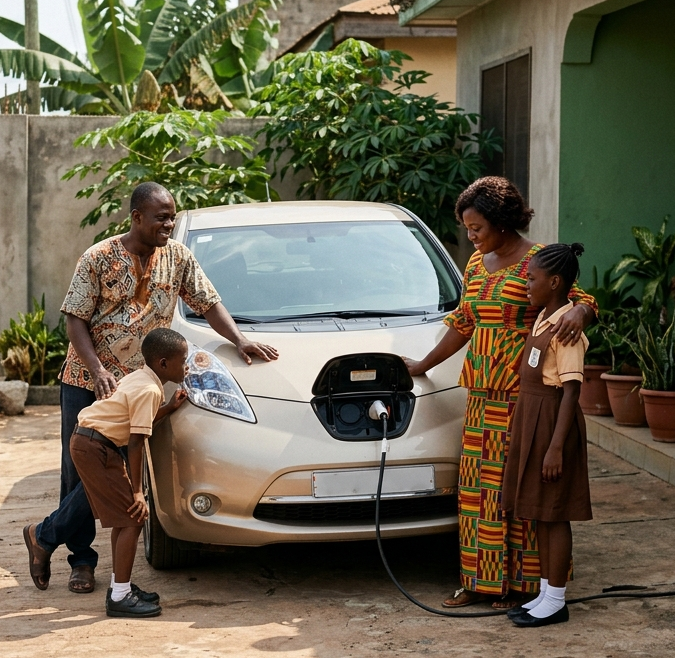
This problem can be relevant in the end also for normal households. Home charging may be convenient, but electrical installations must be suitable for the additional load.
The Big Question: Can the Average Ghanaian Afford EVs?
Technology alone will not determine if electric vehicles in Ghana become the default vehicles. Price is significant.
A 2026 Ghana Clean Transportation Outlook pointed to high upfront costs as one of the most immediate barriers to EV adoption. Financing is another hurdle, as the short loan periods and high interest rates can make an already relatively expensive vehicle even harder to buy.
This means the early EV market may be inherently attractive to businesses, organisations and higher-income consumers before it reaches the wider population. But just focusing on the purchase price can miss another part of the equation.
An electric car has different operating and maintenance requirements from a petrol or diesel car. For a heavy-duty driver, lower energy costs and maintenance costs might impact the overall economics. But for buyers, the real question will be:
What will it cost to buy, to charge, to service and to use the car over some years?
Electric Motorcycles and Commercial Transport May Change the Picture
The future of electric vehicles in Ghana may not be private electric cars alone.
Electric motorcycles, tricycles and commercial fleets could have particular importance.
The Ghana Clean Transportation Outlook identified electric two- and three-wheelers as a sector with potential for industrial development, since these vehicles are often used intensively to generate income. Battery-as-a-service and battery swapping models could also cut the time it takes to recharge commercial vehicles.
For the delivery rider or commercial operator, time is money. The business case looks very different if a battery can be swapped quickly instead of waiting for a vehicle to recharge.
And that’s why battery-swapping stations could be a big part of the electric-mobility story in Ghana, alongside traditional charging stations.
Ghana Needs EV Skills, Not Just Electric Vehicles
Another thing about the transition that’s not given enough attention is people. Electric vehicles need a special kind of knowledge. They need to learn about batteries, electric motors, high-voltage systems, electronic diagnostics, and other technologies that are different from conventional vehicles.
Lands and Natural Resources Minister Emmanuel Armah-Kofi Buah in September 2026 demanded the establishment of a specialised EV capacity-building center to train Ghanaian mechanics and build local technical expertise. This will be an important opportunity for the youth of Ghana.
Beyond sales, the shift to EVs can generate jobs in charging infrastructure, electrical installation, software, battery services, maintenance, renewable energy and technical training.
Will solar power light up Ghana’s EV future?
Ghana’s abundance of sunlight provides another interesting possibility: combining solar energy with electric mobility.
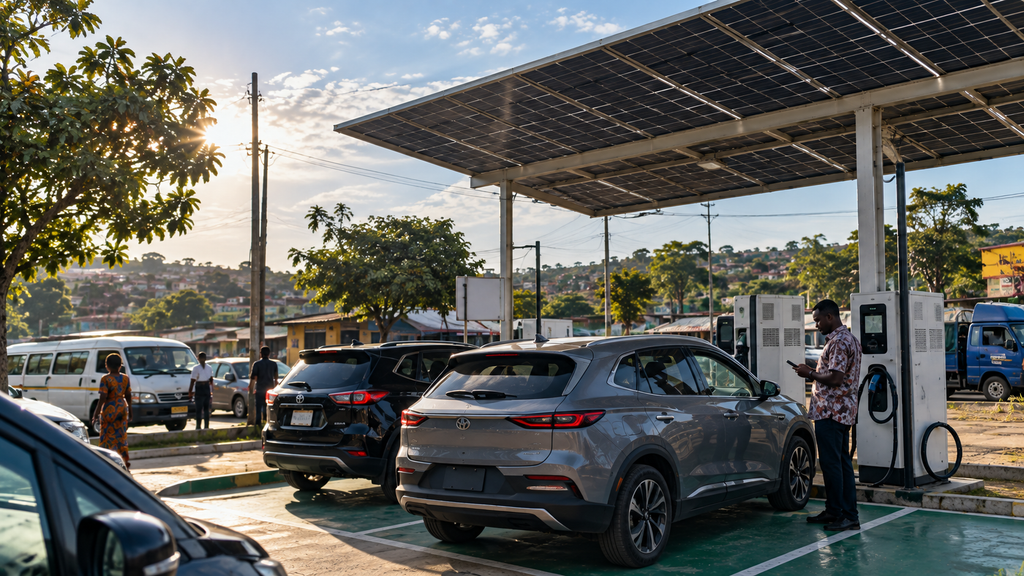
The Energy Commission has already shown an interest in solar-powered charging, including a demonstration solar EV charging station. Solar charging is especially beneficial in areas where grid infrastructure is not well developed or for companies that want to reduce their reliance on grid power.
It could also link two basic aspects of Ghana’s energy transition: renewable power and electric transportation.
But solar charging is not a one-size-fits-all solution. But storage, installation costs, land, charging capacity, and maintenance still need to be taken into consideration.
What The New EV Regulations Mean For Ghanaians
Perhaps the developing regulatory regime might provide something that the market needs: clarity.
Ghana’s Energy Commission had already ordered approval of EV charging and battery-swap installations for safety and technical standards. The newer regulatory process builds on that development and creates a more comprehensive framework for charging stations and battery-swapping systems.
Good regulation can help make charging infrastructure safer and more dependable for consumers. Moreover, clear rules can help businesses understand what they need to do before they decide to put money into a project. Better information on charging locations and demand can support infrastructure planning in the electricity sector.
Are Ghanaians Ready for the EV Revolution?
Ghana is getting ready, but getting ready is not the same as ready for mass adoption.
The country has policy ambitions, developing charging infrastructure, regulatory work, and growing private sector interest. At the same time, affordability, financing, reliability of electricity, coverage of charging, and technical skills are important challenges.
It’s not going to happen overnight. Rather, Ghana’s EV journey could be a slow burner, starting with commercial fleets, electric motorcycles and buses, private businesses and early adopters before becoming more accessible to the wider population.
For the Ghanaian consumer, the next few years won’t be about whether electric vehicles exist, but whether they are affordable, practical and convenient for everyday life.
Ultimately, that’s what will make Ghana’s electric mobility transition a success. So the next phase for the country isn’t just about getting more electric vehicles on the road. It’s about creating an ecosystem around them – from charging stations and reliable electricity to trained mechanics, financing, regulations, and consumer awareness. Ghana has begun that journey. The question is: how fast can the rest of the ecosystem catch up?


