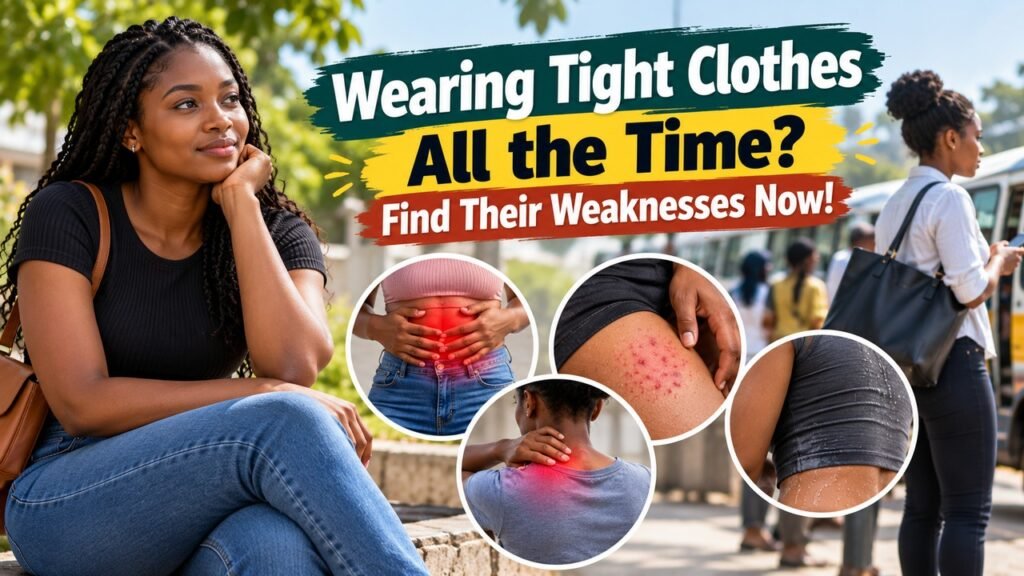
Wearing Tight Clothes All the Time? Find Their Weaknesses Now!
Tight Clothes Fashion can give you a trending look, but sometimes it can affect your body, especially when wearing them all the time. A pair of fitted jeans, tight leggings, shapewear, or a close-fitting shirt may look perfect in the mirror, yet feel entirely different after hours of walking through Accra, exploring Kumasi, working outdoors in Tamale, or travelling to a rural hometown in a crowded trotro.
In Ghana, clothing is not simply about appearance. It must also work with the weather, the demands of daily life, and the body’s natural cooling system. That raises an overlooked question:
Could the clothes we choose to look good in make ordinary life more uncomfortable than it needs to be?
The answer is deeper than only putting a name on tight clothes. Medical evidence shows that clothing can influence heat loss, moisture around the skin, and friction. However, the effects depend on the garment, the fabric, the weather, and the person wearing it. Tight clothes aren’t necessarily unhealthy, but chronic pressure and trapped sweat are something to pay attention to. The World Health Organization(WHO) also lists clothing that inhibits heat loss as a factor in heat stress.
1. Accra’s Heat and the Problem of Dressing Without Considering Your Body
Imagine yourself walking out in the morning in tight synthetic slacks and a bulky shirt. It’s hot by noon, your commute is long, and your clothes are sticking to you. The issue isn’t really the sartorial decision. The combination of environmental heat, physical activity, humidity, and clothing may limit comfortable heat loss.
Sweating and the evaporation of sweat from the skin are one aspect of the body’s cooling system. When it is hot and humid, evaporation is not as efficient, or if clothing is interfering with heat exchange, it is more difficult to stay comfortable.
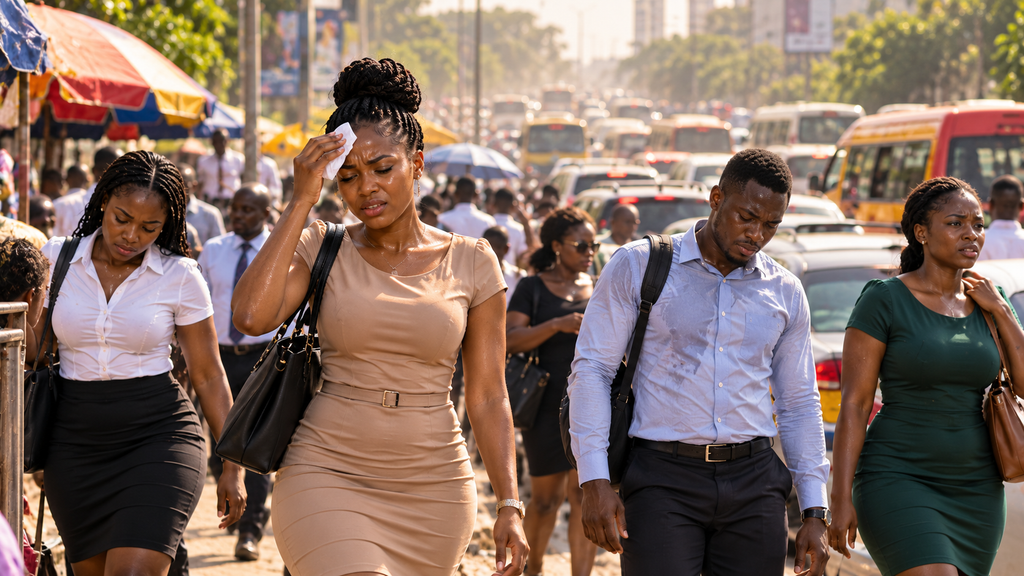
WHO also advises residents of hot and humid regions to wear loose clothing during long hours. This will keep them cool and does not result in skin irritation.
For people in Accra and other warm parts of Ghana, this creates an important everyday consideration. An outfit suitable for an air-conditioned office may feel very different during an outdoor market visit or a long journey across town.
The lesson is not to abandon fashionable clothes. It is to choose clothing according to the environment in which it will actually be worn.
2. The Skin Problem That Begins With Sweat and Friction
Sometimes, the first warning that an outfit is unsuitable is not discomfort from heat but irritation in the skin. Tight waistbands, fitted trousers and leggings can repeatedly rub against the waist, inner thighs, underarms or groin. When sweat accumulates in these areas, friction may become more uncomfortable.
If you get heat rash, or miliaria, it can be from sweat that gets trapped when the weather is hot and humid. This occurs when the sweat ducts get blocked, resulting in small bumps, itching, or a prickly sensation. Risk increases with heavy or tight clothing that traps heat and moisture.
This is especially true for people who do a lot of walking, work outside, or spend a lot of time in warm places.
There is another important distinction: not every rash is heat rash. Allergic contact dermatitis can be caused by textile dyes, laundry products, and other substances in vulnerable people.
If your skin continues to get red, itchy, or sore under a certain type of clothing, you might want to try changing the size, the fabric, or the laundry product. If the irritation persists, spreads, or becomes infected, consult a doctor.
3. When a Fashion Choice Becomes a Heat-Safety Issue
First of all, make it clear that dangerous heat exposure is not the same as wearing uncomfortable clothes.
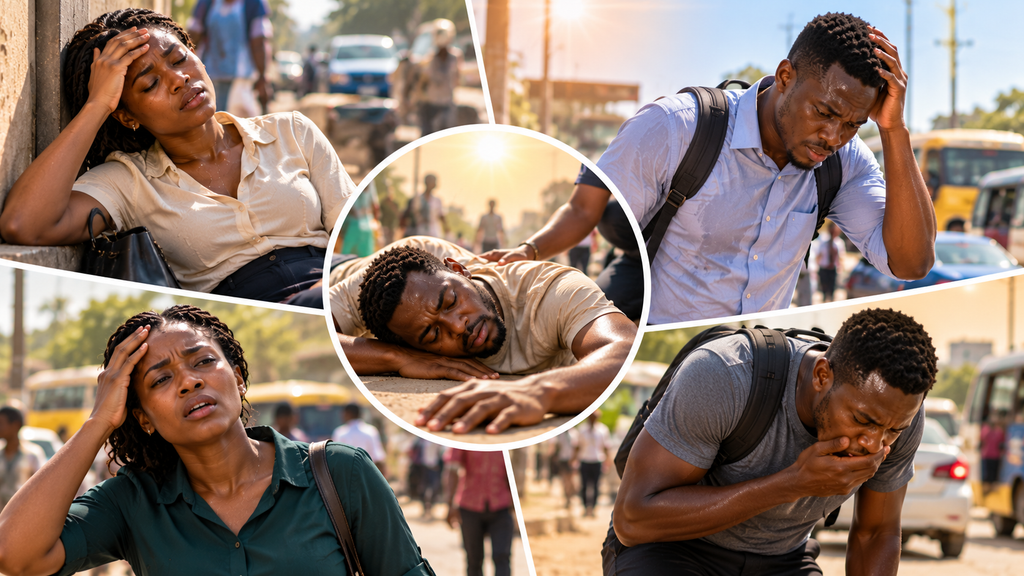
Wearing tight clothes does not automatically cause heatstroke. But clothes that cut down on heat loss can make it harder for the body to deal with heat, especially if vigorous physical activity is involved or if you are exposed to high temperatures for a long time.
For example, a street vendor, construction worker, delivery rider, or market trader may be exposed to much greater levels of heat than someone working in an air-conditioned office.
The CDC’s Ghana travel health guidance advises people to wear loose, lightweight clothing, drink regularly, and limit physical activity during high temperatures. This is a useful principle for daily life. If you develop severe weakness, confusion, fainting, or other signs of serious heat illness, seek emergency medical care. Do not assume that simply loosening your clothes will be enough.
4. The Hidden Discomfort of Tight Waistbands After Meals
There is a familiar experience many people recognise: a comfortable pair of trousers suddenly feels restrictive after lunch.
In Ghana, where meals may include waakye, banku with soup, fufu or rice dishes, the feeling of abdominal fullness can make a tight waistband particularly unpleasant.
Pressure from restrictive clothing may aggravate discomfort in someone who already experiences bloating or reflux. But this does not mean tight trousers stop digestion or that ordinary fitted clothing causes digestive disease. The useful distinction is between aggravating a symptom and causing an underlying medical condition.
If your waistband presses painfully into your abdomen, choose a fit that allows you to sit and bend comfortably, including after eating. If abdominal discomfort is frequent, severe, or accompanied by concerning symptoms, consult a healthcare professional rather than assuming your clothing is the only explanation.
Your wardrobe should allow for normal changes in comfort throughout the day.
5. Damp clothes and tight pants need attention
Some clothing decisions require a little more thought as they are worn near sensitive parts of the body for long periods of time.
Fitted sportswear, leggings and tight pants can create friction and discomfort, particularly when sweating or during longer physical activity. Irritation can be caused by moisture trapped against the skin.
People prone to recurrent skin-fold inflammation may benefit from reducing friction and choosing clothing that allows moisture to escape. Medical literature on hidradenitis suppurativa, a chronic inflammatory skin condition, also recognises clothing-related friction as a practical factor worth addressing in symptom management.
This does not mean that tight underwear inevitably causes:
- infertility,
- reproductive disease
- or infection.
Such claims would go beyond what this evidence establishes. Instead, pay attention to persistent itching, soreness, numbness, or skin changes. Change out of damp clothing promptly and seek medical advice if symptoms continue.
6. Ghanaian Fashion Does Not Need to Choose Between Style and Comfort
Ghana has a rich clothing culture, from colourful kente-inspired designs and tailored shirts to fitted dresses, jeans and contemporary streetwear.
The conversation should not become an argument against traditional fashion or modern trends. The more useful question is how to make clothing work better for the person wearing it.
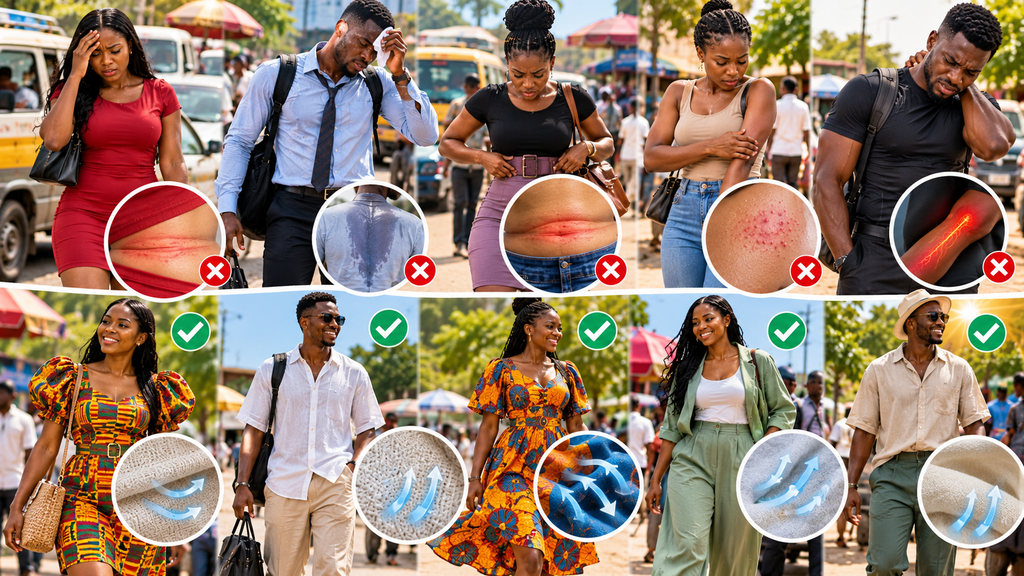
A tailored outfit can be comfortable if it allows sufficient movement and does not trap excessive heat. A baggy outfit can still be uncomfortable if it is made of a heavy fabric and has poor ventilation. If you are looking for something for daily wear, then you might want to consider these practical options:
- Choose lightweight fabrics that are suitable for the temperature of the day and the activity you will be doing.
- Check that seams, elastic, and waistbands do not dig into your skin.
- Before buying fitted clothing, try sitting, walking, and bending.
- Change out of sweat-soaked clothing as practical.
- Don’t wear clothes that hurt, tingle, or numb you.
Cotton and other breathable fabrics can be useful choices, but no one fabric is ideal in every situation. Fabric construction, moisture management, fit, and personal sensitivity all matter. The goal is not to follow another fashion rule. It is to understand what works for your body.
7. The Social Pressure Behind the Perfect Fit
There is a less visible side to this subject: the pressure to look a certain way. Social media, celebrity fashion, and workplace standards can drive people to choose clothes that create a particular silhouette, even if the clothes are uncomfortable.
Someone may keep wearing trousers that are too tight because buying another size feels embarrassing. Another person may tolerate restrictive shapewear because they believe it is necessary to look professional or attractive. But clothing size is not a measure of health, discipline, or personal worth.
Bodies naturally change with meals, movement, and other ordinary processes. A garment that fits well at one moment may feel restrictive later. Choosing a more comfortable size is a practical decision, not a failure.
Fashion becomes more useful when it supports confidence without demanding that people ignore discomfort.
8. A Simple Clothing Health Check for Everyday Life
Before leaving home, consider three questions.
Can I move freely? Walk, sit, bend, and raise your arms. Your clothes should not prevent ordinary movements.
Can I manage the weather? Consider whether the garment is suitable for outdoor heat, exercise, long commutes, or time spent in poorly ventilated spaces.
Does my skin feel comfortable? Persistent rubbing, itching, numbness, or pressure deserves attention rather than repeated adjustment throughout the day.
These checks are simple, but they encourage a more practical relationship with clothing.
If symptoms continue after changing garments, seek professional advice. Clothing may be contributing to the problem without being its only cause.
Final Thoughts: Dress for the Life You Actually Live
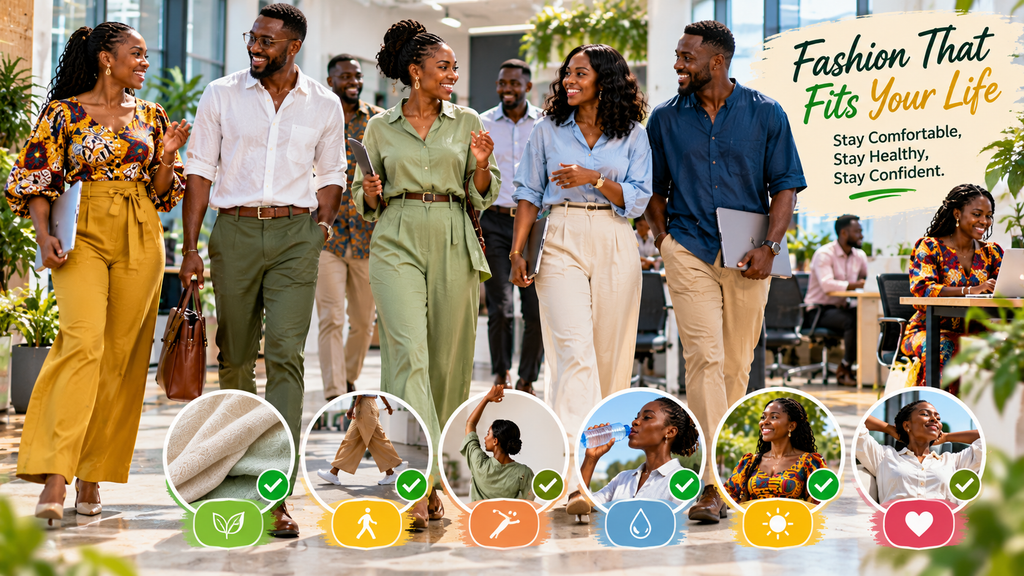
In Ghana, a good outfit must do more than look impressive in a photograph. It must also work during the journey to work, the afternoon heat, the family gathering, and the long day that follows.
Tight clothing is not inherently harmful, and there is no universal rule that everyone must dress loosely. The real concern is repeated discomfort, excessive pressure, skin irritation, and clothing that interferes with the body’s ability to manage heat.
The most useful fashion decision may not be choosing the trendiest outfit. It may be recognising when a garment is no longer serving you.
Wear what reflects your personality, but let comfort and health have a place in your style decisions.
Medical disclaimer: This article is for general educational purposes and does not replace personalised medical advice. Persistent rashes, numbness, pain, or symptoms of heat illness require appropriate medical assessment.