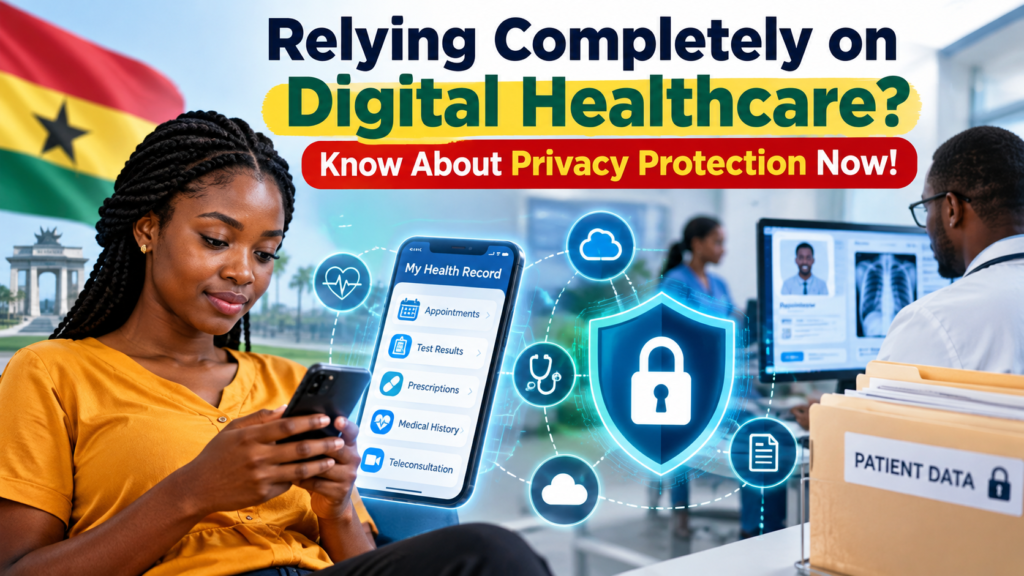
Relying Completely on Digital Healthcare? Know About Privacy Protection Now!
Imagine entering a health facility and, within minutes, accessing your medical history, previous test results, and prescriptions. There’s no need to carry a folder of papers or start from scratch with your medical history every time you visit a new doctor.
This is one of the most promising changes that digital healthcare has made. Technology can help people access medical care, help health workers make good choices, and improve care for patients.
But there is a flipside to that convenience. What if someone who’s not supposed to see information in a digital system does? You have many organisations involved in your care. Who owns your medical records?
These questions are increasingly important to Ghanaians as the country develops its digital health systems. We’re not just talking about making health care faster. It’s also about protecting the personal data that people give to doctors, hospitals, and technology providers.
How is digital health changing the face of Ghana?
Digital healthcare in Ghana is one part of a larger effort to improve health services using technology. Electronic medical records, digital reporting systems, mobile health apps and remote consultations can help connect patients with healthcare professionals and make it easier to manage medical information.
Ghana is updating its strategy and operational guidelines on medical records to keep pace with advances in digital health, data governance, cybersecurity and artificial intelligence, says a World Health Organization report on Ghana’s digital health developments released on 12 October 2026.
Imagine a patient located far from a large hospital. Digital systems can help healthcare workers retrieve earlier test results, manage referrals, and make follow-up care more efficient. A patient living with a long-term condition may also benefit from the ability of authorised professionals to access relevant medical information without unnecessary delay.
These improvements will be beneficial to families, older people and people in communities where access to specialist services is difficult.
But, with all due respect, convenience shouldn’t mean that everyone has access to medical information. A patient’s diagnosis, medication history, and test results are very personal information. As much as their protection, the quality of the treatment itself must be attended to.
The Hidden Trade-Off: Convenience vs. Privacy
Every digital service is a decision about what information to collect, why it is needed, how long it is stored, and who can access it.
In digital healthcare, the information can be particularly sensitive. A medical record could show a person’s physical or mental health, reproductive health history, medication use, or other private matters.
The biggest concern is not that digital healthcare is inherently unsafe. Well-designed systems can safeguard information. The concern is what happens when security is weak, when permissions are over-extended, and when information is shared without sufficient legal authority.
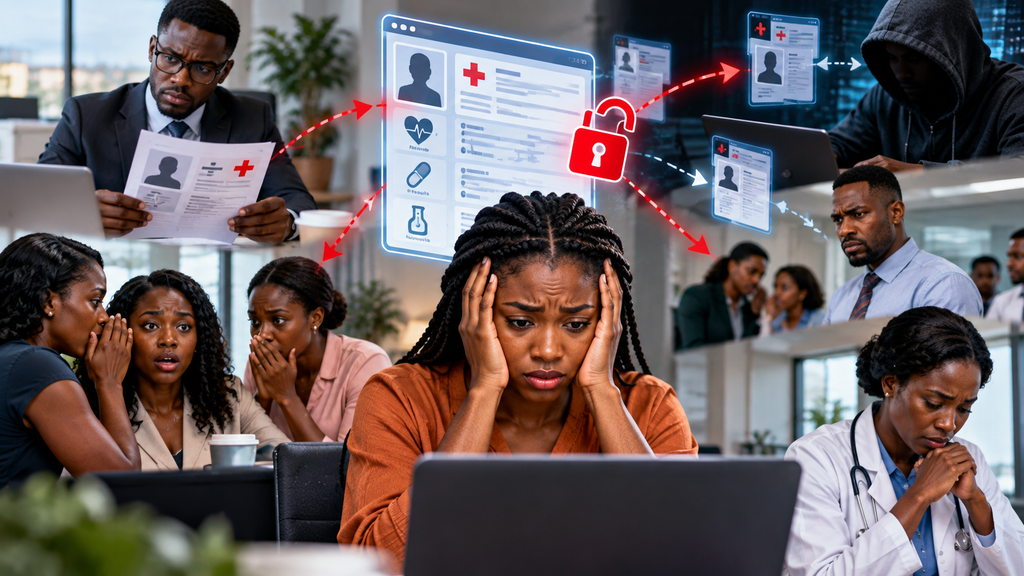
Now imagine finding out that information about a sensitive diagnosis has been shared with your employer, circulated among people who have no medical obligation to you, or leaked out in a security breach. The consequences could be embarrassment, discrimination, anxiety, and a loss of confidence in healthcare providers, even if no money is stolen.
This is why patient privacy protection should evolve with digital innovation. A good system should provide authorised professionals with the information they need, but keep it away from unrelated people.
Ghanaian Patients: Do Privacy Protection Laws Work?
Ghana has established a legal framework for the protection of personal information. The Data Protection Act, 2012 (Act 843) makes provision for the collection, use, disclosure and management of personal data.
The Ghana Data Protection Commission states that “Individuals have rights concerning their personal information such as the right to obtain information about the processing of their personal data and the right to object to the processing of their personal data which causes or is likely to cause unwarranted damage or distress.”
The law also covers the processing of sensitive data such as health and patient privacy protection information. Section 62 of Act 843 states that personal data referring to the physical or mental health of an individual may not be disclosed unless disclosure is required by law.
These protections are vital, but a law is only part of the answer. Patients need organisations to follow the rules, and staff who understand how to deal with confidentiality and how they can report suspected misuse effectively.
For example, a hospital may have the correct patient privacy protection policy, but the efficacy of such a policy depends on practical measures like individual staff accounts, limited access, secure devices, staff training and regular security reviews.
Patients should also remember that the right to privacy does not mean that in every case consent is required for every use of medical information. Health care providers may use some information when they need to provide treatment or to meet public health responsibilities.
The key questions are whether the processing is lawful, necessary, proportionate and adequately protected.
What happens when health information is shared across borders?
The range of organisations involved in digital healthcare can include hospitals, technology vendors, researchers, government agencies and international health partners. The flow of information across organisational or national boundaries makes it especially important to know who receives it and under what conditions.
The controversy of digital healthcare in Ghana over a proposed US health-financing deal illustrates why this is an issue that matters far outside individual hospital visits. Reuters reported that Ghana turned down a proposed deal worth about $109 million in April 2026, over concerns about sharing sensitive health data.

The bigger question is how countries can fund themselves, improve disease surveillance, strengthen health services and keep proper control of sensitive information. International cooperation can help to support important work on diseases such as malaria, tuberculosis and HIV, but agreements must clearly define what information may be shared, for what purpose and under what safeguards.
A responsible arrangement should impose limits on data collection, retention, onward sharing and access. It should also generate a sense of accountability in case the information is mismanaged.
This may reduce unnecessary exposure of individual identities where public health research can meet its aims using anonymised or aggregated information. However, anonymisation needs to be carefully assessed, as some patient privacy protection data sets could be combined with other information to identify people.
Digital Healthcare in Ghana is more than just a technical challenge. It is tied to public trust and national decision-making and the duty to ensure that improvements to healthcare do not harm people without cause.
Are You Protecting Your Medical Data?
Patients don’t get to decide the technology that a hospital has at its disposal, but there are pragmatic steps they can take to improve their digital safety.
1. Critique health apps.
Before using a digital health service, check: Who runs it? What information it collects? Does its privacy policy explain how the information will be used?
2. Secure your accounts.
Use strong, unique passwords and multifactor authentication if available. Never share your login credentials or one-time verification codes with anyone, even if they claim to be from a healthcare organization.
3. Don’t use public devices.
If you’re using a shared computer or phone to access medical information, sign out and don’t save passwords on the device.
4. Don’t share unnecessarily.
Do not post prescriptions, lab reports, hospital documents, or identification details on public social media accounts. If you need the advice of a qualified professional, please consult online through an appropriate secure channel.
5. Be wary of unsolicited messages.
Scammers may pose as hospitals, insurers, or healthcare workers asking for payments or personal details. If you get a suspicious message, call the organization using a phone number you independently verified.
6. Know your rights.
Ask your health care provider how your information can be used and who may have access to it. If you believe there has been misuse, make a record of what happened and contact the relevant healthcare organization or the Ghana Data Protection Commission for advice.
None of these steps eliminate all risk associated with Digital Healthcare, but they can help people make better choices about their personal information.
What can healthcare providers do differently?
But privacy in digital health care is not just the responsibility of patients. Security needs to be baked into systems from the ground up, by hospitals, government agencies, and digital health companies.
That means collecting only the information you need, for a legitimate reason, using encryption, limiting access to information to those who need to know, and monitoring who is accessing sensitive information. In addition, organisations should have clear procedures for responding to security incidents and informing those affected where appropriate.
Training staff is just as important. Even the best-Designed computer systems offer no protection from every mistake if employees share passwords, leave records out, or give away information in casual conversations.
This is an opportunity for Ghana to do better on such practices in its current attempt to revise guidance on medical records. The WHO said digital health policies need to evolve as technology progresses and information management needs change.

As artificial intelligence in digital healthcare expands, more questions will arise. Organisations will need to think about the data used to train or run artificial intelligence systems, how decisions are reviewed, whether outputs can introduce bias, and how patients can raise concerns.
Technology must be used to support professional judgement and improve patient care, not to create a situation where people cannot understand how their sensitive information is being used.
Can digital health and privacy coexist?
Yes. This is not a question of choosing between modern medical care and patient privacy protection. Responsible design of digital systems can improve efficiency and safeguard confidentiality. Both can be achieved by improving access control, having clear policies, sharing data responsibly, and providing effective oversight.
For Ghana, the next phase of digital healthcare should be more than just the introduction of new apps or the linking of databases. It should also build public understanding and trust.
Patients need to know their information is being taken care of. Clinicians need systems that allow them to provide effective care without burdensome administrative processes. Innovation must be accountable to those it serves, and so policymakers and technology providers must make sure that it is.
At its heart, privacy in digital health care is about dignity and trust. A medical record is more than just a collection of data points. It’s your experiences, your vulnerabilities and your efforts to live a healthier life.
But whilst the true test of progress will be Ghana’s ability to expand access to healthcare, it must also ensure that patients are kept informed, protected and respected in an increasingly connected world.